It started with an annoying flu on Thursday, which seemed to have gone away completely come Friday. But then on Saturday night/ Sunday morning, I felt something go incredibly wrong with my body: my throat started hurting incredibly. Runny nose, phlegm, and almost certainly a fever.
Sunday, if I wasn't drifting in and out of consciousness in bed, I was throwing up, either phlegm or said phlegm getting in just that right spot in my throat to trigger a gag response to throw up whatever I last ate. My throat burned. I couldn't breathe. I could hardly think. It felt like COVID all over again, except I tested negative. Because it was a Sunday as well, most clinics aren't open, and those that are only opened for half a day. I guess no one falls sick on a Sunday, and me being the weirdo I am, didn't get the memo as usual.
So Monday rolls around, and I gave my usual clinic a call, and they aren't open because the doctor is on leave that day. That left me with the more convenient choice of the clinic at a mall much nearer to my home. Now, it's not my first time falling ill, obviously, and so I knew that clinic waiting times, especially on a Monday morning when no one wants to show up for work, will be somewhere in the ballpark of 2 hours, and I'm not about to waste that kind of time sitting among the diseased while staring at diagrams of the human anatomy, so I gave another clinic, which I shall just refer to as "MFC" for now, roughly standing for "mother fucking clowns", a call, asking them for their next earliest slot. Annoyingly, the person at the other end instead told me to install some kind of app, with which I'm supposedly able to take a queue number.
I guess I'm getting old, because I remember a time when technology was supposed to make lives more convenient. Upon downloading the app, I was forced to create an account, which required a password of at least twelve characters, one number, and one special character, whatever that means. And I'm sitting here like, "bitch, who's trying to hack into my account, that has no bank account details and barely any personal information?" I swear, the next time I'm unfortunate enough to have to use that app again, I'm not going to remember my password, and it's just arrgh. Oh, and there are several pages of T&Cs to read through before I can create my account. B I T C H, I ' M D Y I N G O V E R H E R E, hello?! Does being forced to agree with the T&Cs of an app while I'm violently ill constitute as being forced to sign a contract while under duress? Because if not, I'm just imagining a bright and smart future wherein I get stabbed in the chest by a good old fashioned knife, and before I'm allowed up on the ambulance, I'll have to read up every law textbook at the bargain price of 80 million dollars while simultaneously having to learn Arabic just to have an "extra special" character in my password so someone can't steal the data of and subsequently impersonate the long dead.
And that's not even the worst part!
The worst part is that, upon creating an account, I'm forced to key in the "clinic code" of the clinic I'm intending to visit. Whatever the fuck be that? I even tried quotation marks Google searches, and turned up empty, and it's not like the app lets me type in the name of the bloody clinic like a good old fashioned old fart, nor does it allow me to pick a clinic close to me like a smart whippersnapper despite needing my location services for god knows what reason. It was looking to me like the only way I can add a clinic onto my list was to have a QR code of the clinic to scan... which is very conveniently located in the bloody clinic.
So what exactly the hell is the point of the app then?! What was the bloody point of me having to haphazardly agree to all the T&Cs and privacy policies I don't possibly have the knowledge nor life span to read, IF I'M GOING TO HAVE TO WALK INTO THE CLINIC ANYWAY.
Still better than what Americans have to deal with currently, I suppose.
So, I walk in, and after 2 hours of staring at walls and diseased people, I had my one minute consultation that costs 20 dollars, and walked out. The medicine was a huge relief, though I do wish I felt taken more seriously. I don't blame them; it's a first time customer walking in on a Monday morning with clear lungs and subsiding symptoms, surely he must me trying to skip work. One minute. Really? And no PRT tests? And only 2 days MC when I was throwing up and drifting in and out of consciousness just the day before?
Today, Wednesday, is the day that I'm supposedly fit to return to work, but I still don't feel fit to face customers, and my head's still rather foggy, and hence I'd really rather not drive. Helps that I had a nightmare this morning about having a horrendous accident, too.
I was driving along a nefariously narrow and torturously twisty stretch of road, with an abyss of a canal to the left with no guardrails. The road was barely wide enough to drive on, but apparently it was a two way street? A double decker bus turned to face me from a junction ahead, and I tried to make room for it by hugging left as much as possible. It wasn't a quick, reflex action, but rather, a slow, deliberate action, but I didn't judge it correctly, and my left wheels dipped into the canal. Somehow that sent my entire car falling into the abyss, which was wide enough to swallow my car whole, but narrow enough to pinch it still after falling a certain way down.
I was sitting sideways in my car. The steering wheel is bent for some reason. My arms were somewhat trapped. I tried to shut off the engine but I couldn't even reach the button. Eventually, the engine became starved of oil from being sideways and the car shut itself off anyway. I tried to use my phone to call for help, and for some doggone reason, help was just unintuitive to find. I seriously considered just expiring in that ditch instead of going through all that trouble of finding the correct help I needed.
When I woke up in a sweat, I remember staring at the ceiling with eyes wide open thinking, "holy hell, that was a dream?!" Relief obviously washed over me, sure, but I don't ever recall a time where a dream felt so real that I woke up in disbelief that it had been a dream. They've always been fantasies, subconscious ventings, things of the sort. They've never been set in the real world.
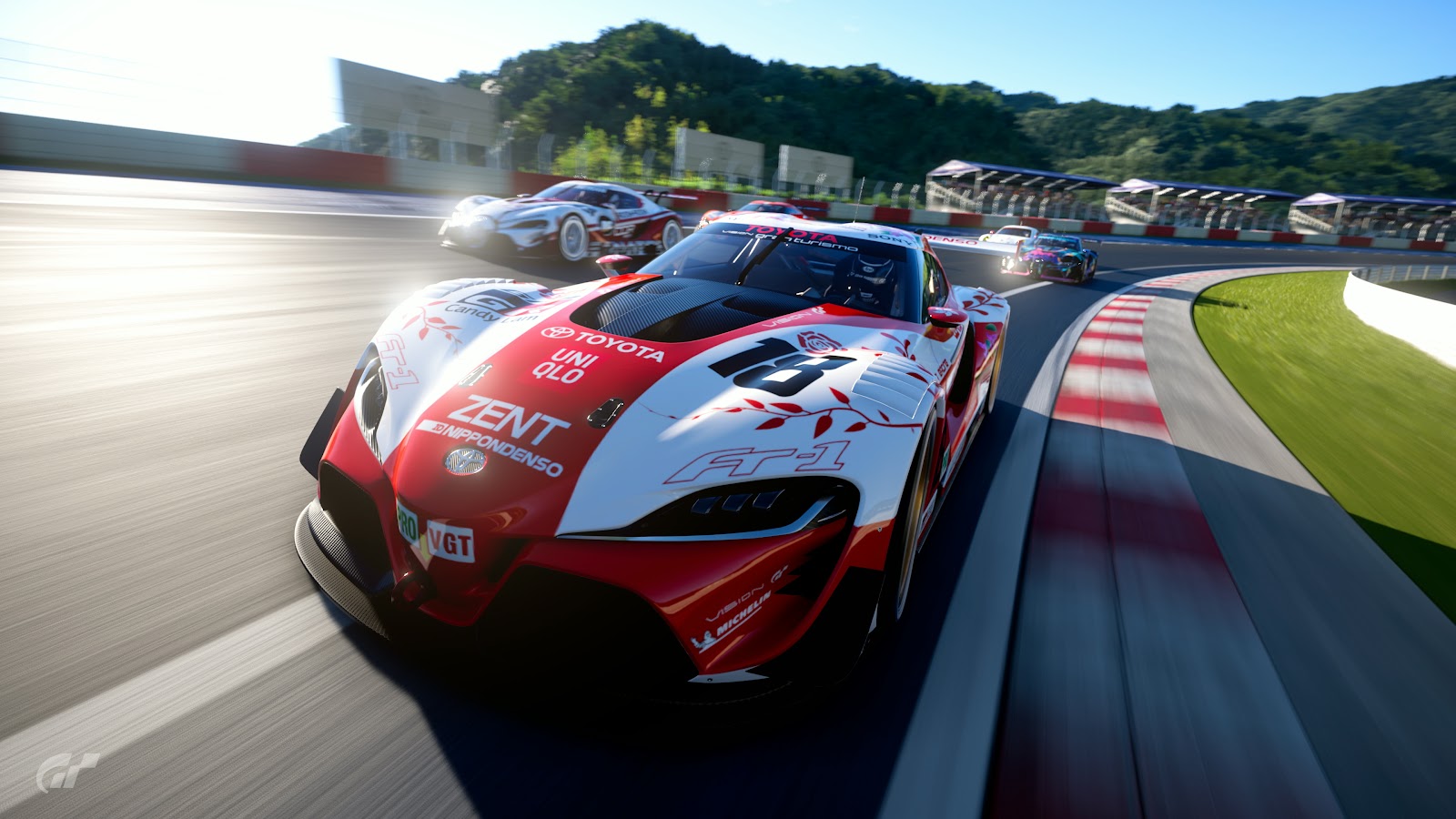
The Toyota FT-1 VGT Gr.3 may explicitly have "Gr.3" in its name, but it feels to me like what you'd get if you took a GT500 car and hacked off a good chunk of its power and downforce. Predictably, it drives like a confused, bloody disaster as a result.
But to understand why I assert that the FT-1 VGT is a GT500 car, we need to first take a quick skim through the FT-1's brief history, and make a few quick assumptions as to what Toyota were aiming to do with it.
Unveiled at the 2014 North American International Auto Show, the original FT-1 concept car served as the spark that facilitated the arson of excitement on the camp of people that had been sorely missing and eagerly awaiting the revival of the "Supra" namesake by Toyota. Despite flaunting a clear engine cover cutout on the car's risqué bonnet, what Toyota was envisioning bolting under that see–through space was a total mystery—both in real life where engine covers have oddly become the norm, and in Gran Turismo games where any hard numbers were simply not given to the players. Fortunately, the games did at least have to give the FT-1 a voice, and the voice that was bestowed upon the silhouette of the hopeful Future Toyota was that of a Inline 6, setting up the FT-1 to fall in line together with some of Toyota's most revered creations in the past like the 2000GT and the A80 Supra.
From this, the FT-1 was adopted into the contentious Vision Gran Turismo program, spawning a race–ready version of the FT-1 by first adding the "VGT" suffix to the name, then widening its body, slamming its ride height, bolting on full racing slicks and a towering rear wing, heavily gouging its body panels, and putting it all through an unhealthy diet, all to bring the specs of the car to what the Gran Turismo community derived to be 614HP and 1,000kg in mass (458kW, 2,200lbs). The Otaku among the car enthusiasts may already feel a tinge of nagging familiarity seeing those numbers, but the most telling number of them may just be the number "4"—the racing version of the FT-1, the FT-1 VGT, makes Inline 4 noises instead of those of an Inline 6, and it came with a KERS. 2014 was also the first year that GT500 technical regulations unified with DTM's, which stipulated that all cars are to be FR with 2 litre single turbo Inline 4 engines with KERS... weighing a tonne and outputting a little over 600HP.
If the original FT-1 was meant to preview the production Supra, then I think it's pretty clear that the FT-1 VGT was meant to preview Toyota's plans to represent themselves with a Supra in Super GT's GT500 category.
But, a production ready Supra wouldn't become reality until 2019, some two years after the launch of Gran Turismo Sport—a video game that laser focuses on sanctioned racing with "Gr.3" and "Gr.4" cars, loosely based on real life GT3 and GT4 categories respectively. A Gr.3 86 more than makes sense in my opinion, seeing as some privateer teams have already fielded 86s and BRZs in GT300, but I suppose it's much easier to simply take an existing model and lop some speed off than to make an entirely new car from the ground up, which is probably why the FT-1 VGT was kneecapped to squeeze into Gr.3 as Toyota's representation in the e–sports centric title—at least, until the "proper" Supra arrived. Power was slashed to 544HP (406kW), and the car would have to put back on some the mass that was so thoroughly shed to become a racecar—280 kilos of it, in fact, to fit into Gr.3 at a middling 1,280kg (2,822lbs). Other unseen changes include unplugging the KERS, while shortening and bringing closer together the largely useless ratios of the FT-1 VGT to make up for it.
It's almost like Polyphony Digital simply could not change a single node of how the car looked, out of respect or some licensing agreement—I can't say. Unfortunately, that also meant that they couldn't change the ride height of the FT-1 VGT, which snowballs into a few glaring issues with the car here in GT7.
For some context, most FR cars built from the ground up for Gr.3 come with a ride height of 60mm front and 70mm rear in GT7 (2.36in, 2.76in). The FT-1 VGT Gr.3 however, smothers its own shadow at a mere 50mm front and 60mm rear (1.97in, 2.36in). "But that's a good thing, right? Low cars go faster in corners, don't they?", you might be asking. As with most things, a low ride height is only good in moderation, and the FT-1 Gr.3 comes in way too low, even for a racing car.
With the car being set low enough to spark on some of the less obsessively smoothed over racetracks outside of Japan, the FT-1 Gr.3 is extremely sensitive to road imperfections, elevation changes, and just a nervous wreck to drive in any situation. Seemingly flat and innocuous rumble strips, such as the one on the inside of Suzuka's Turn 2, for instance, will quite literally and figuratively tilt the car, liable to result in a perpendicular meeting with the inside barrier if not caught immediately. That rumble strip, for all intents and purposes other than supporting an FT-1 VGT, is completely flat, even in bona fide GT500 machines and Super Formulae. With a car set so low, the suspension also has to be set that much more stiffer than most Gr.3 cars to prevent the car from completely bottoming out or shaving off its own body panels with its tyres, and what translates to in handlingese is that the car can't seem to put weight on any tyre at all; it takes a touch longer to slow for a corner than most Gr.3 cars, with or without BoP, nor does it much want to bite an apex with trail braking, even with a fully rearward brake bias setting. When getting on the power, I can't "load up" the rear tyres at all, no matter how gradually I ease into the throttle pedal; past three quarters throttle, the rear end just instantly snaps off if there's any steering lock applied. The car simply feels set up to have much more grip than any Gr.3 car can be allowed to have, mechanical and aerodynamic.
Now in the much more liberal Gr.3 category, the FT-1 VGT Gr.3 could have had either the Inline 6 of the original FT-1, or the Inline 4 of the FT-1 VGT. Thankfully, the Gr.3 car went with the latter, because I think it's one of the most flexible and pleasant engines I've ever sampled in both GT Sport and here in GT7! Power output may have been slashed, but the hyphen engine still revs to a Rotary–shaming, Hayabusa–harassing 10,500rpm! It might be a reasonable assumption to make that an engine that revs to such common sense defying speeds would be a small displacement engine, utterly gutless in the low and mid range. That may well be the case, but we will never know for certain because that's where the turbocharger comes in to save the day—it delivers its peak boost of almost 1 bar at around 5,2, past which the boost pressure completely deflates to let the engine's natural peakiness take over. What this combo results in is an engine that I never would have guessed is turbocharged if not for the spec sheets and in–game HUD; it's peppy, responsive, makes no turbo noises, still asks of its driver to rev it out to about 9,6, but has a healthy punch from around 7,5 to overwhelm the maladjusted suspension setup. For some context, most upshifts at 9,6 drop the engine to about 8,2, giving drivers a lot of leeway in where and when to shift. Sometimes I find myself flicking through the paddles just for the hell of it. 9,6, by the way, is also when the car will upshift if driven in AT mode, making this car an extremely inclusive and welcoming pick for players who can't, or don't want to shift for themselves. Drivers can even save an upshift when fast approaching a corner with a healthy 900rpm headroom between the optimum shift point of 9,6 to the engine's fuel cut at 10,5 if this engine ever becomes available to swap into a manual gearbox car, and it's a thought that I'm properly salivating over. I genuinely think this would be the perfect racing engine if it wasn't thirstier than the livery I put on the car!
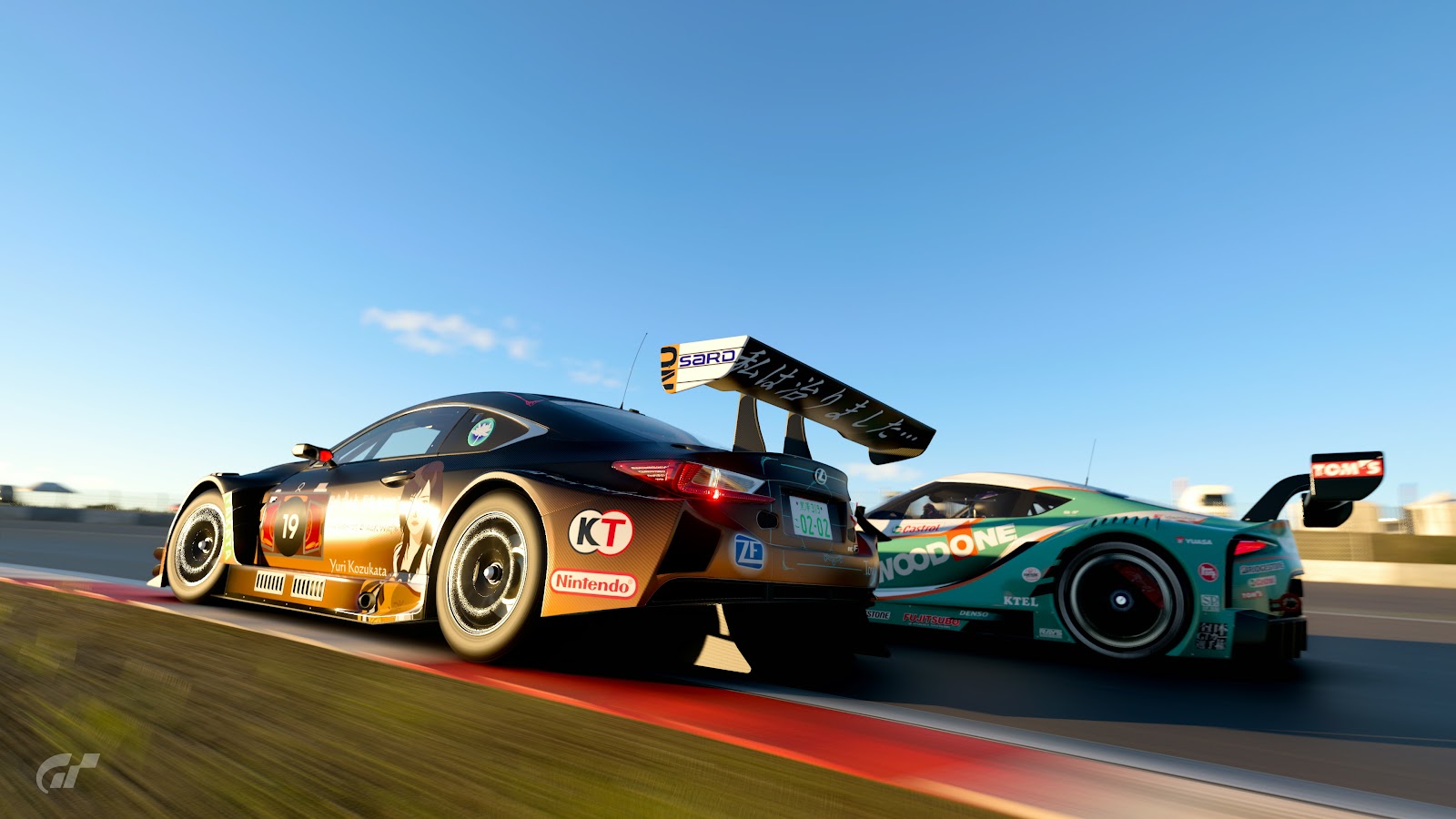
To illustrate, I decided to compare the FT-1 VGT Gr.3 to the GT3 version of the car Toyota were looking to replace with the FT-Supra in GT500: the Lexus RC F GT3 '17. Straight from the Brand Central, the Lexus weighs more, has less power, is less balanced with 54% of its weight up front as opposed to the FT-1's 51%, and it doesn't have a purpose sculpted low and svelte sports car body to effortlessly slice through the air, instead having to wear the silhouette of a luxobarge. A car like that, no one would think has a chance in hell against the FT-1, but—get this—the hulking 5 Litre NA V8 of the RC F returned me much better fuel economy, all in spite of heaving around more mass, which let me clear the lucrative Sardegna WTC800 event faster. That, plus the Lexus was just a much more predictable drive. How can the FT-1 have all those numbers and still be this slow?!
https://youtu.be/uMv921H7BiY
Under BoP conditions in our lobby, the two cars are much more closely matched. The FT-1 seemingly still has some pace to match the midfielders, but it got utterly destroyed when matched up against a currently strong pick for Gr.3 in the Mazda RX-Vision GT3 Concept '20, with its only saving grace being Vic behind the wheel of the Toyota.
The RX-Vision GT3 is similarly a high revving, racing version of a long hood, short deck FR concept sports car from around 2014. While the shrieking RX-Vision similarly doesn't have the hot lap pace to compete against the current meta that is the Gr.3 Supra, it still has a strong presence in Gr.3 races nowadays, owing to its scrumptious looks and equally bewitching handling—traits the FT-1 Gr.3 used to boast back in GTS before the Supra replaced it. But, handling impeccably is just the RX-V's side hustle; it's main draw is that it's incredibly light on tyre wear and fuel use, making it a very quick car in races where pitting is involved. With its biggest strength being nullified in a short 4 lap sprint though, how does my RX-V fare against Vic's FT-1 around Big Willow?
https://youtu.be/IcluKRYEiXs
...insultingly well, actually. Races against Vic usually come with a rapidly impending sense of doom; "oh boy, Vic's in 2nd now, I hope I can hold onto this 3 second gap with 2 laps to g— HOW DID HE JUST TAKE HALF A SECOND OFF ME IN ONE CORNER OHMYGOD". In that race, though? Even with cautious driving within known limits as a result of fading FFB, I was gapping Vic's FT-1 consistently come the straights. Understand, the RX-V is not a straight line missile; it has longer ratios than the FT-1, and under v1.35 BoP when we ran this race, it also has a worse power to mass ratio! Yet, it gapped the FT-1 in the straights, simply because it can actually put down power out of corners. For the first time in perhaps ever, I felt a sense of reassurance and calm when being chased by Vic, simply because I knew I had a much, much better car.
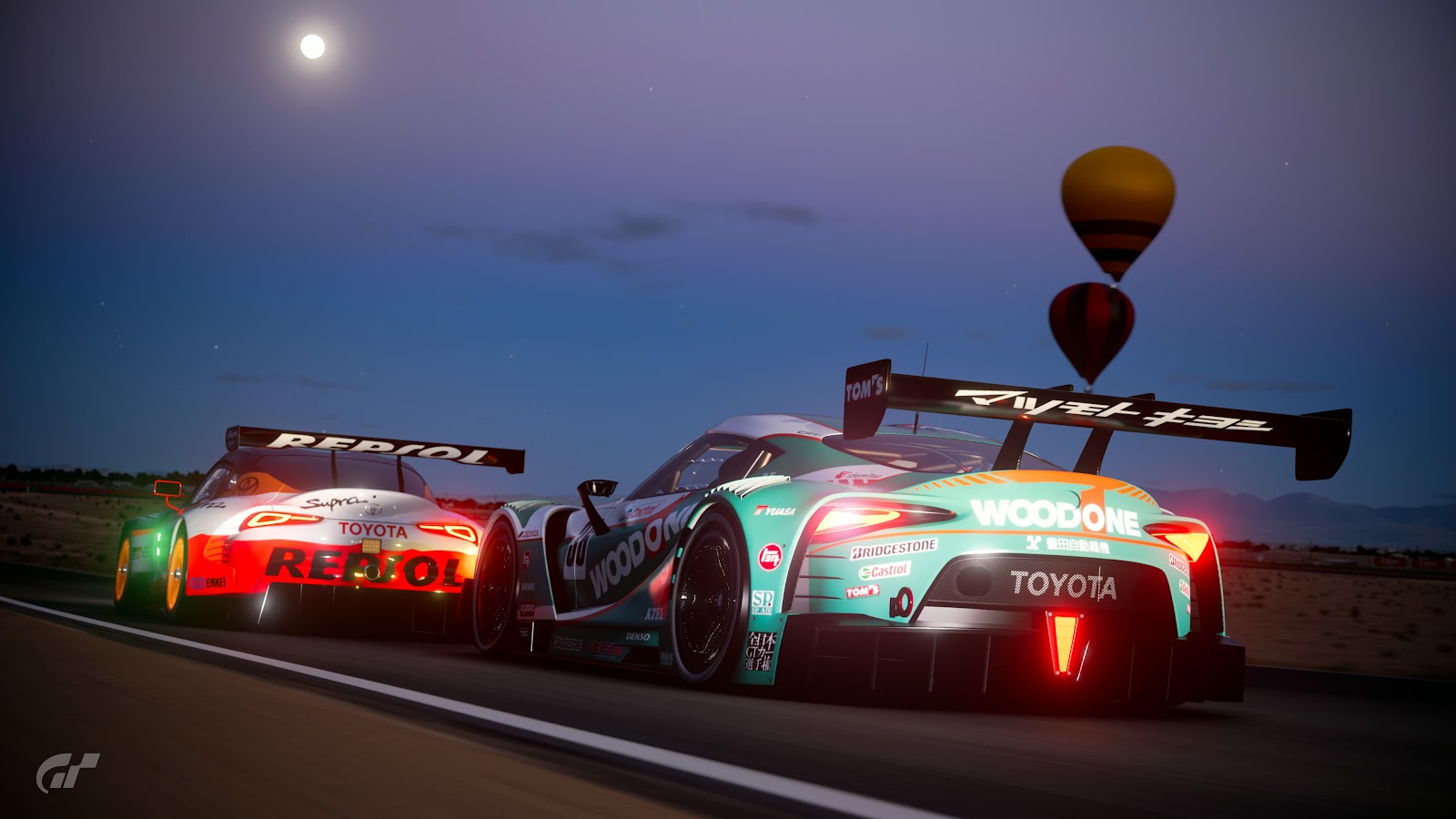
The FT-1 VGT Gr.3 has gone to great lengths to fix the flaws of the original FT-1 VGT: it doesn't hide its specs or power curves, fixes its useless gearing, while offering upgrade potential via turbo kits and adjustability to its suspension setup, both of which completely unavailable in the original, all while coming in at less than half the price. And, sweet baby Buddha, have I mentioned how astounding this thing looks yet?! Its outlandish, free, and expressive design makes a A90 Supra look like a pale, castrated imitation of what ought to have been. Just like how a pretty girl can make even pajamas look pretty, the FT-1 makes just about any livery on it standout masterpieces. There wasn't a single "eh, that's pretty good" livery from my peers during race day; they were all bangers I'd love to rock, from Baron's badass skull design, Vic's adapted Woodone livery that looks like it had been designed for the FT-1 and borrowed to the A80 Supra instead of the other way around, to Candy Lam's patriotic Hong Kongese car. Had the production A90 Supra looked like this, revved like this, and drove well, I might finally feel again that indescribable magic feeling that the bubble era of Japanese sports cars made me feel.
While politics will understandably work against the FT-1 now that a fully fledged Supra race car is available in Gr.3, the only way an FT-1 can win hearts and eke out a niche for itself is via subjective fronts. Me personally, I really, really wanted to like this car, especially after I spent about four days obsessively making a livery for the car. I don't even care of it's slow; I just wish it drove better. I would happily take this car and punch up against the meta if it had the prowess and consistency to do so. Ask my peers how many times I brought my Cayman GT4CS to race in Car of the Week over the 3 or so years I've been doing this, knowing full well its shite and uncompetitive. If I can trust the car and know it well, I can push it much closer to its limits, making me faster than if I were in an unfamiliar meta car. What makes or breaks the appeal of of a handling car for me is that it should earn the driver's trust, and perhaps entice them to play just a little bit, even in the context of a racecar. None of the FT-1s made me feel that. And unlike the Genesis X GR3 of Week 13, there unfortunately is no quick, easy fix to the FT-1 Gr.3's problems, and so I find it very, very hard to like the car, and it breaks my goddamn heart that I can't fall for it.
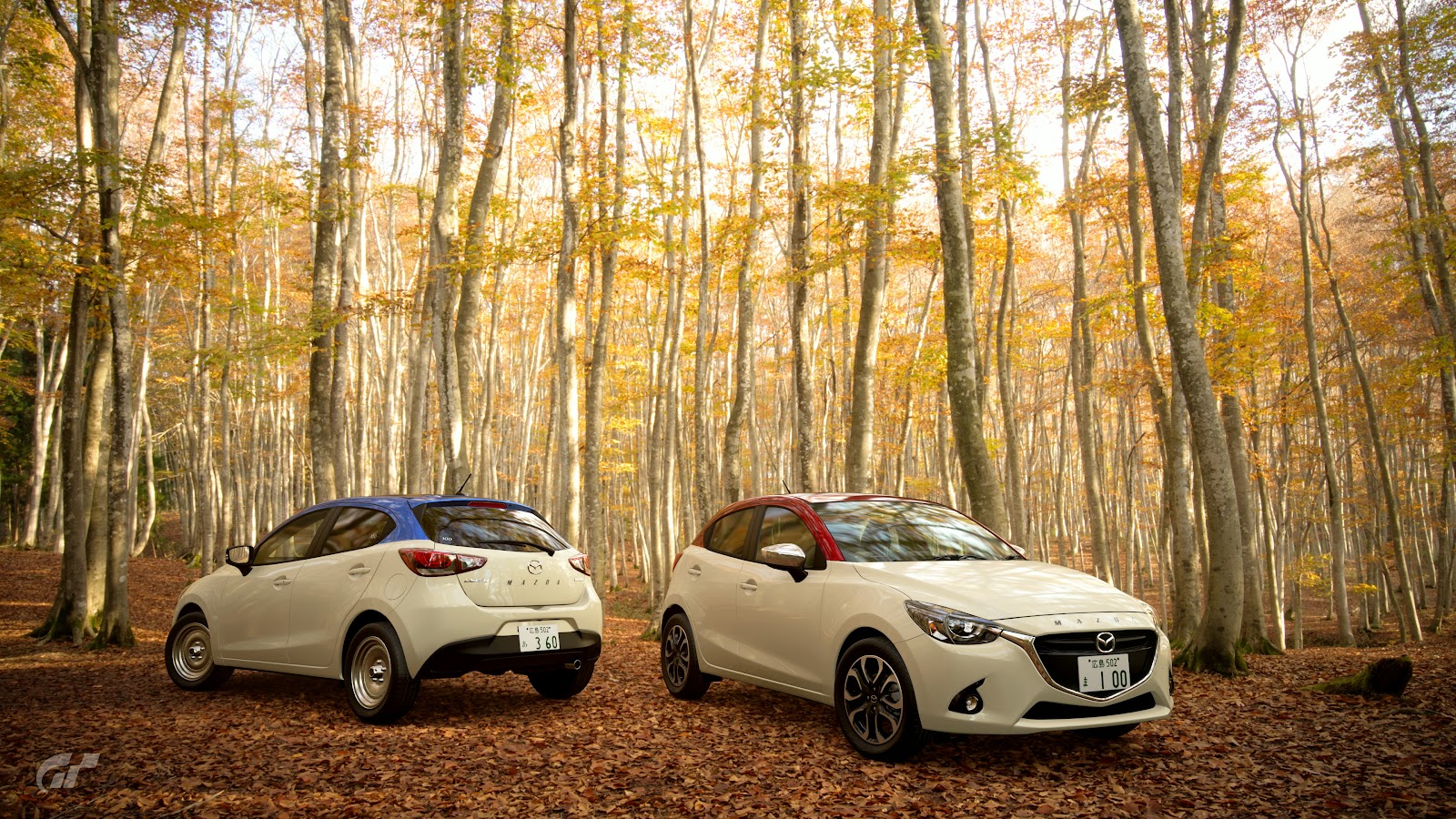
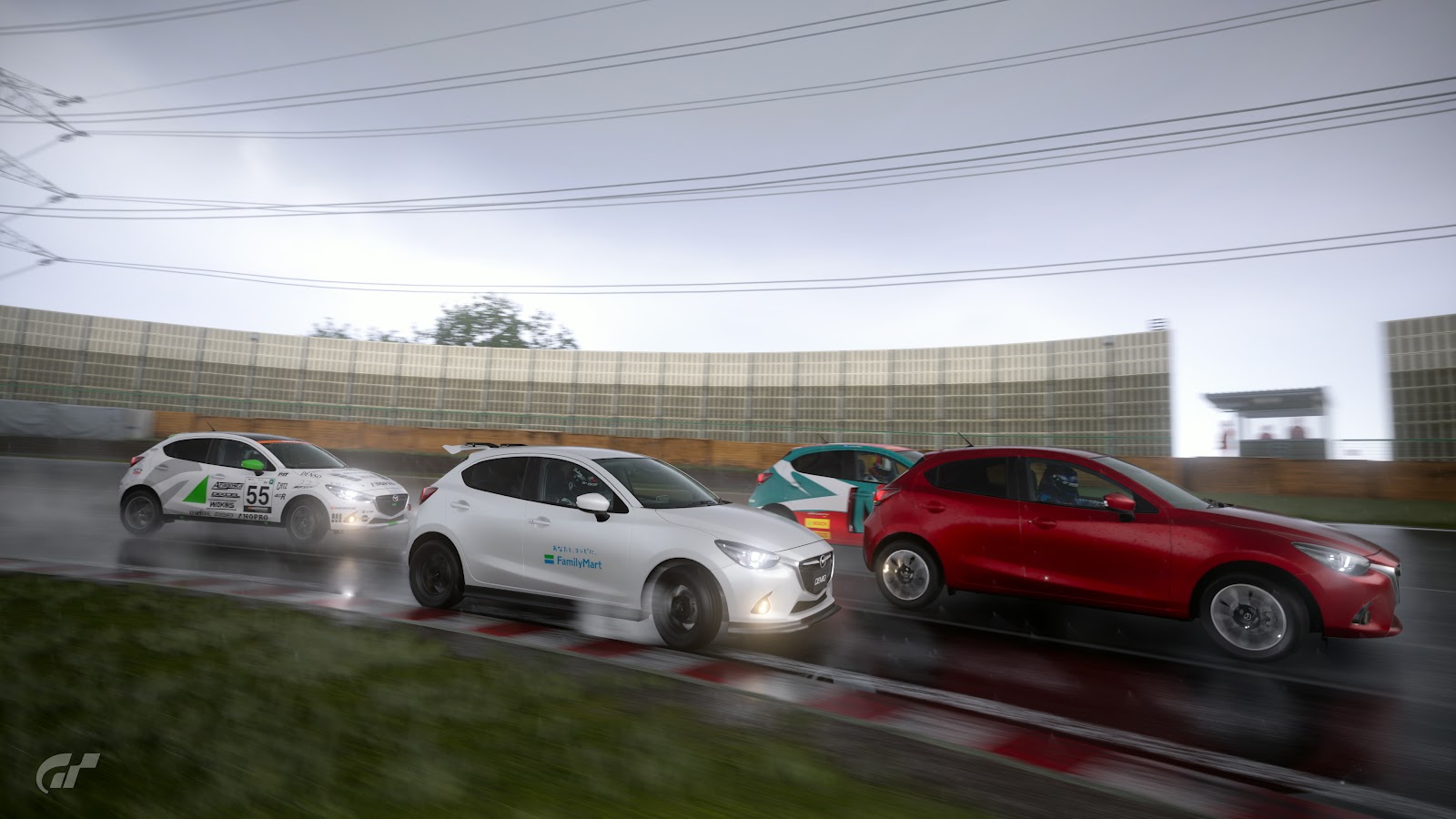
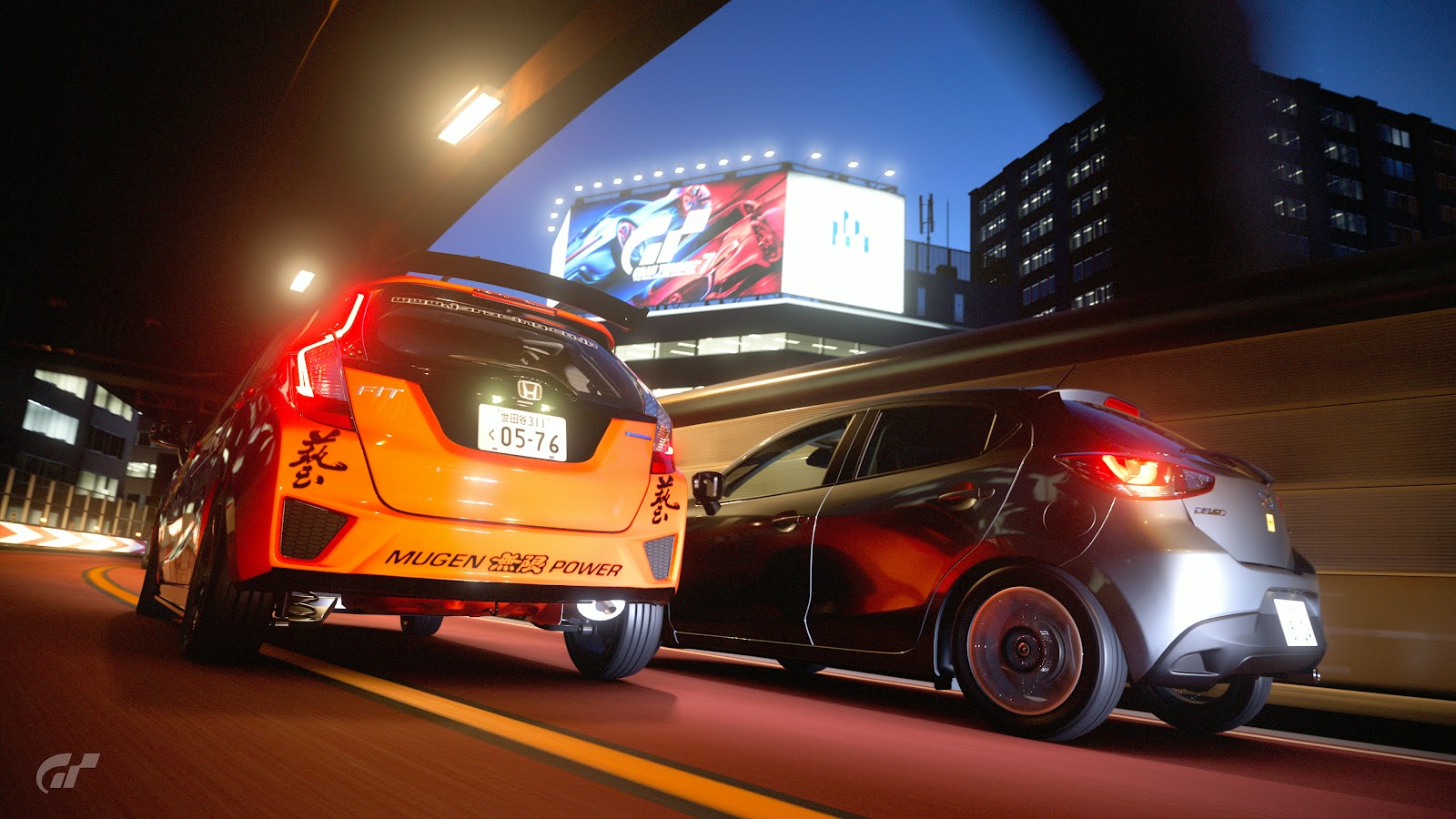
The 2015 Mazda Demio XD Touring is an entry level hatch from the quirky Mazda make, giving players of Gran Turismo 7 a strong appetiser into the Hiroshiman brand of weird right at the start of the game—it's one of the only five diesel powered cars in this game, and one of the only two that are road cars. It's also one of the three starter cars the player can buy upon starting the game. Despite its big quirk of being a diesel powered car, the fourth gen Demio I strongly opine offers the most traditional driving feel among the three starter cars available, and it might just be the pick among its litter as well.
Seething up front is Mazda's patented SKYACTIV-D 1,496cc turbo diesel powerplant, driving the front wheels via a proper 6 speed stick shift, immediately setting itself apart from the CVT saddled Toyota Aqua and the 7DCT Honda Fit with no manual mode (in real life). As if that wasn't enough, the little Mazda is the only one among the three starter cars that comes stock with a limited slip differential to further its sporting credentials, no doubt helpful in keeping all its turbo diesel torque in check, which can reach a peak of 219.6N⋅m (162.0lbf⋅ft) from just 1,500rpm, which the car will idle at if equipped with an aftermarket anti–lag system set to weak.
But of course, gobs of low–end torque is to be expected from a diesel engine. Heck, it's its selling point.
Another thing you ought to expect from a diesel on–track is that it really doesn't like to be revved out, which practically necessitates the car being driven on manual shifting mode, making it perhaps the most beginner unfriendly starter car, paradoxical as that sounds. The car may have a rev limit low enough to bump your head on at 5,500rpm, but power peaks at 4,000rpm, past which the entire block might as well fall off the car for all the difference it makes. The rev bar in the game starts counting from around 4,3, and I've had best results shifting the car not far past that at around 4,4, making the human ear and a set of earphones much better tells for shifting the car than the game's displays. Contrast this to the tabletop torque curve of the Honda Fit that almost doesn't mind being shifted whenever, and the CVT of the Aqua that eliminates shifting entirely while keeping it in peak power for its driver, and the Demio looks almost cumbersome and unrefined to drive.
That theme continues into the twisty bits of the track as well; the diesel Demios suffer a hefty fifty kilo (110lbs) mass penalty over its petrol counterparts of the same grade, and it has a centre of gravity that feels to me to be markedly higher than not just the other two starter cars, but of its compact hatch class as a whole. When that package is suspended above the soft springs and economy oriented tyres the Demio comes with, the end result is a car that necessitates the utmost care when being eased into a corner; the car takes a tiny moment before it really responds to asks of its driver, and the Comfort Medium tyres don't take much abuse before giving up. It hates being braked when off balance, and is rather difficult to coax into biting an apex for a car of its size and mass, requiring braking just that bit earlier than would be intuitive, sometimes even with pointing the car towards an apex before slamming on the middle pedal. It's the sort of car that requires drivers to smoothly connect the next few corners and set the car up for them well beforehand, as the Demio doesn't respond well to sudden compensating maneuvers. In short, despite its starter car status and low speeds, the Demio nonetheless demands the full attention of its driver to be driven well, and can even peek into dangerous snapping territory if abused, with its soft springs, tall cg, and short wheelbase.
With the aforementioned cornering concerns coupled with its abysmal power deficit to the other petrol hybrid starter cars, it's no surprise that the Demio is the slowest of the three in a hot lap scenario. Yes, the Aqua drives god–awful, and is dead in the water after around 4 minutes of flat out driving, but the Toyota is unethically fast when it still has charge. Even a Fit depleted of its hybrid battery charge has a pronounced straight line speed advantage over the Demio, to the point where a Demio with the full, close quarters slipstream of the Fit can't overtake when pulling out of the tow to pass when both are driven with manual shifting. Not to mention, the Demio is also the most expensive of the three when bought new from Brand Central, costing a whopping 19,500 Credits in contrast to the 16,500 and 17,900 Credit asking price for the Fit and Aqua, respectively, though it is the cheapest when bought at the start of the game from the Used Car Dealer.
Despite its shortcomings against its direct rivals in the game, I have a strong respect for the Demio, and look towards it fondly like I do most Mazda models. I think the Demio has achieved a sweet balance between capability and communication. The Aqua is unethically quick in terms of one lap pace, but it's just hopelessly clumsy in the corners, and never "talks" to the driver about anything until the car hits the wall. The Fit may corner effortlessly and mostly without drama, but it also tends to build unfounded confidence in its driver because of it, only to let go suddenly when push comes to shove. The Demio may at first appear cumbersome to drive, but that's because the car is always "talking" to the driver. I'm always cognizant of where weight is on the car, and am constantly made cautious of how I tip the car into a corner. I'm always forced to respect it. It trains me to perceive the nuances of a car's feedback better, and conditions me to be smooth, calculated, and deliberate in my driving. I daresay that my time in the Demio has made me faster in the Fit. In my Time Attack runs, I've managed to lap Streets of Willow about a tenth quicker with a charged Fit than the Demio, which is a gap that's much smaller than I expected, given how lethargic the Demio feels in comparison to the Fit, along with its gaping 35HP power deficit. It hung with the Fit in the corners, and even had short lived advantages out of them with its absurd torque. If you're from the generation that thinks a Mk I Golf GTI is fast, the diesel Demio is just as quick. That is to say, despite specs and sensations dictating otherwise, the Demio is deceptively capable still.
Yes, it's the slowest and least beginner friendly of the three starter cars. But, a first car that trains its drivers to treat all future cars right I'd argue makes for the best starter car in any scenario. I wrote in my review of the Demio back in Gran Turismo Sport that the Demio may have a "2" in its name in most markets, but it's the gateway to many firsts for many people. While I may not have started my GT7 journey with the Demio, it will have the honour of starring in the first GT7 COTW videos I'm uploading to YouTube!
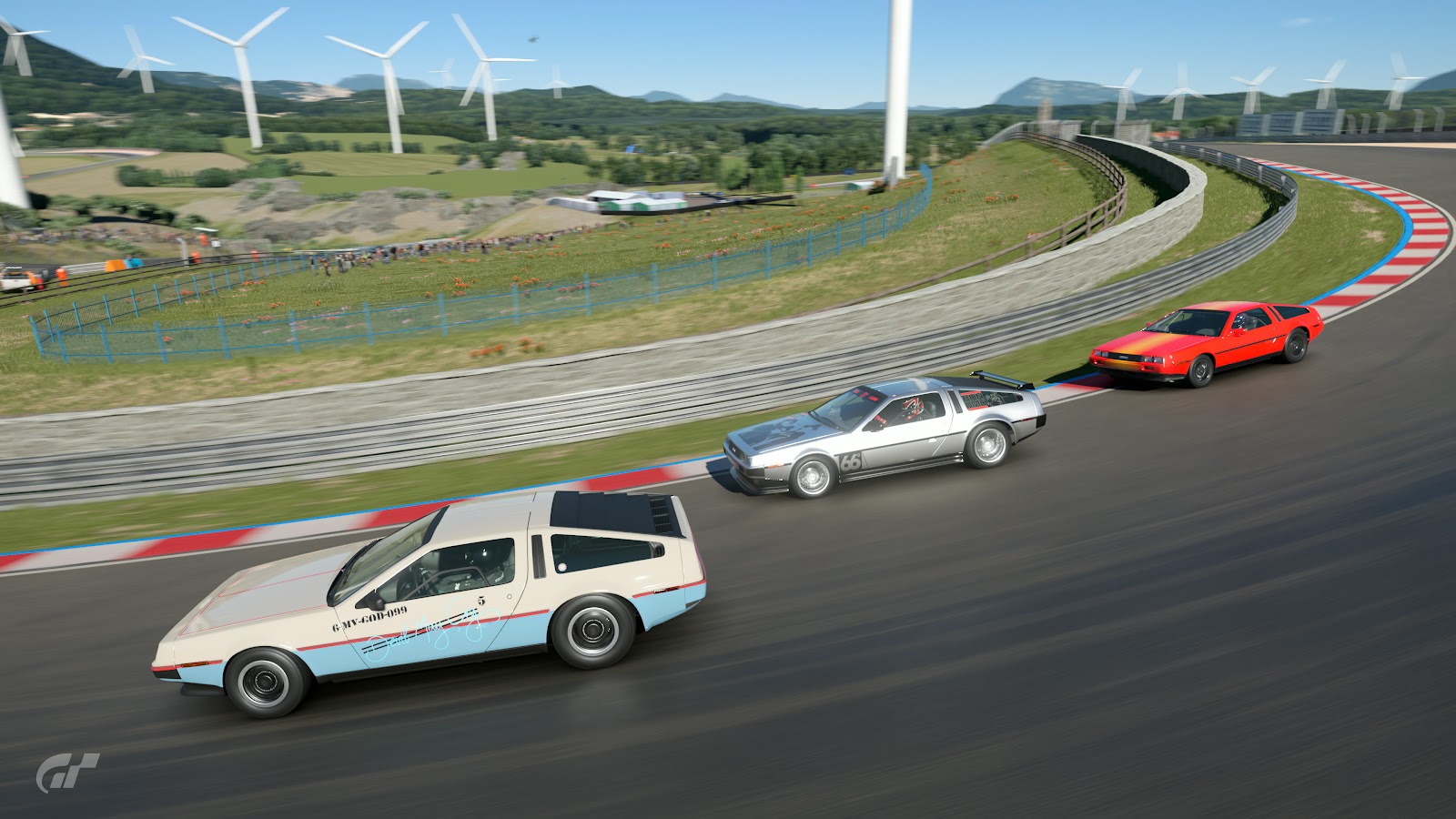
For something that boasts a glistening stainless steel body, the DMC DeLorean's tumultuous journey into production is rife with nothing but stains, minor and major; it looked to incorporate novel technologies such as elastic reservoir moulding, unit–construction plastic chassis, airbags, and even a mid–mounted Wankel Engine for 12,000 of the finest 1980s US dollars, but not only did none of that make it past planning, the production version that reached customers' hands saw the Italian styled Lotus chassis pump out a laughable 130HP from a Peugeot–Renault–Volvo V6, hung aft the rear axle for some reason. If you thought all that is a head scratcher, wait till you try to figure out why that shoddily built and largely incoherent mish–mash ended up costing 25,000 USD—over twice its original target price! For everything that John DeLorean had achieved and overachieved in his life up to that point, it seemed that the one thing he'd have benefitted from, but sadly didn't have, was a homie that'd tell him, "You talk too much, homeboy you never shut up!"
Had it not been for a certain movie giving the DMC-12 a starring role, the DeLorean might have quickly faded into obscurity where it arguably belonged. But, the fact is, it's fondly remembered by many because of said movie, so much so that, in 2004, a largely authentic refresh of the original, called the "S2", was unleashed under new ownership, which finally gave the daring, futuristic car some decent shove to back up its looks and asking price... which now amounts to a cool 525,000 Credits... in 2023 money. I suppose that's in keeping with the theme of the original as well.
Boy, if this thing don't have enough power to make this car go fast enough to break special relativity and send me back in time, I'm going to do everything in my power to make sure those new owners end up behind bars.
I've never watched "Back to the Future". I think the car is daylight robbery. But I have it in my garage, and I've driven it. Surprise surprise, it isn't total shite. Quite the opposite, in fact!
Had I not seen the spec sheets prior to driving the DMC-12, I never would've guessed that this thing has a rear engine, rear drive layout—RR for short—code for some of the most heinous, bloodthirsty psychos on four wheels, such as the RUF CTR and the Alpine A110, but the DMC-12 simply doesn't Walk This Way. Putting down power doesn't set off a chain eruption of the Pacific Ring of Fire, and trail braking doesn't immediately rot every rubber plantation in the world. In fact, even with its upgraded 197HP (147kW), it's difficult to get into trouble in the DMC-12. The staggered 195–235mm tyres mean that it's always the front end that's the limiting factor in any situation, from braking into a corner to powering out of it, and they give only slight hints that they may be suffocating for the requisite weight to really challenge the rear tyres throughout. Said 197HP peaks well below the car's 7,000rpm redline, and that is sent forward through a 5 speed manual gearbox geared so tall that mid fourth is all one can reasonably expect to see around most racetracks, which means it isn't going to have the speed to get itself into any real trouble with an experienced set of limbs.
Despite its rather comical, almost off roader 160mm (6.13in) ground clearance, the DMC-12 displays no unwanted or unexpected body motion when a corner approaches, being taut and immediate enough with its suspension setup to put it well into hardcore sportscar territory a cut above established names such as the FC RX-7 and E30 M3. Of course, with its slim front tyres and massively rear biased weight distribution, the front end has to really hunker down on the front tyres to get them to grip, necessitating a softer front end. While this does mean that the front end does struggle for weight and grip into high speed sweepers, it also does mean that the front end is extremely sensitive and responsive to weight shifts, to the point where it felt like my left foot on the throttle pedal was directly tied to a pulley controlling the lift and dive of the front end; every minute twitch with my big toe resulted in palpable weight shift over the front and visible trimming of the turning radii, making the DMC-12 an extremely controllable sports car that offers no excuse to its driver.
In fact, the only hint on–track that the DMC-12 has an RR layout is its featherweight front end, which feels light enough to be carried off by a slight crosswind like a kite. With just 39% of the car's scant 1,288kg (2,840lbs) over the front wheels at rest, one could very effortlessly turn the unassisted steering wheel of the DMC-12 to the point where it goes completely limp and convulses, without ever touching any of the three pedals at speed. This means that drivers will have to be keenly aware of the car's turning radius at any speed, and consciously hold the car within the limits of its front tyres in the corners to avoid understeer, in contrast to modern cars that will at least simulate weighing up the steering wheel when approaching the limits of grip, and let go more linearly past that. Needless to say, the tyres feel incredibly woeful, even for a car of its scant mass and passable power; the DMC-12 largely shares braking points with some of the more unwieldy Gr.4 brick missiles, while itself struggling to surpass 200km/h. While the car is rock solid in the dry, these Comfort Soft tyres are so utterly miserable and almost completely useless in the wet that I couldn't believe that they were radial tyres—I even had to dip well below 50km/h (31mph) for some of Tsukuba's tightest corners in the torrential rain. It really comes alive because of that, though, as I could finally slide the car around, and it retains all the "flickability" and ease of use even in the worst of conditions.
Information on what's been revised on the S2 over the original car is just about nonexistent on the internet, including what's been done to the NA V6 engine to up its power from 130HP to almost 200, but what I can tell you is that it makes peak power at 6,000rpm, past which the charts fall off a cliff, and peak torque is helpfully available from 4,000rpm, making this a car that needs to be short shifted. I personally find best results shifting this somewhere around 6,400rpm of 7,000, which is slightly just past halfway in the game's shift bar. And it just doesn't sound that good. The gear ratios could both be shorter and closer together as well, because as it is currently, it's functionally a tall 4 speed mated to an engine with no top end to redline it on a racetrack. Don't ask me, because I don't know why it's been set up like this, but It's Like That, and that's the way it is.
(Grunting noise)
Because of its limp front end and long stopping distances, I find that I really have to ironically baby this car when driving it hard around a track in order to extract the fastest time from it, to really take care of it and not let it trip over itself. There are no sharp and hard movements to be made with my hands or feet; I have to slowly roll into the steering wheel, ease into the pedals, give the car ample setup and "warning" before diving into a corner, lest I ask the car to do something it isn't loaded up properly to do. Ordinarily, sentences like that I intend as complaints towards the big, heavy, and unwieldy, but the lightweight DMC-12 is hardly uncooperative; it just needs a bit of help and patience to do what is asked of it. Driven right, the DMC-12 not only feels barely like an RR car, but it can also feel a lot lighter than it's near 1.3 tonne mass, almost like what I imagine a Lotus Elise would drive like, dare I say. That is to say, the DMC-12 an intensely engaging drive that puts a microscope to a driver's ability, clearly subdividing drivers of similar skill levels.
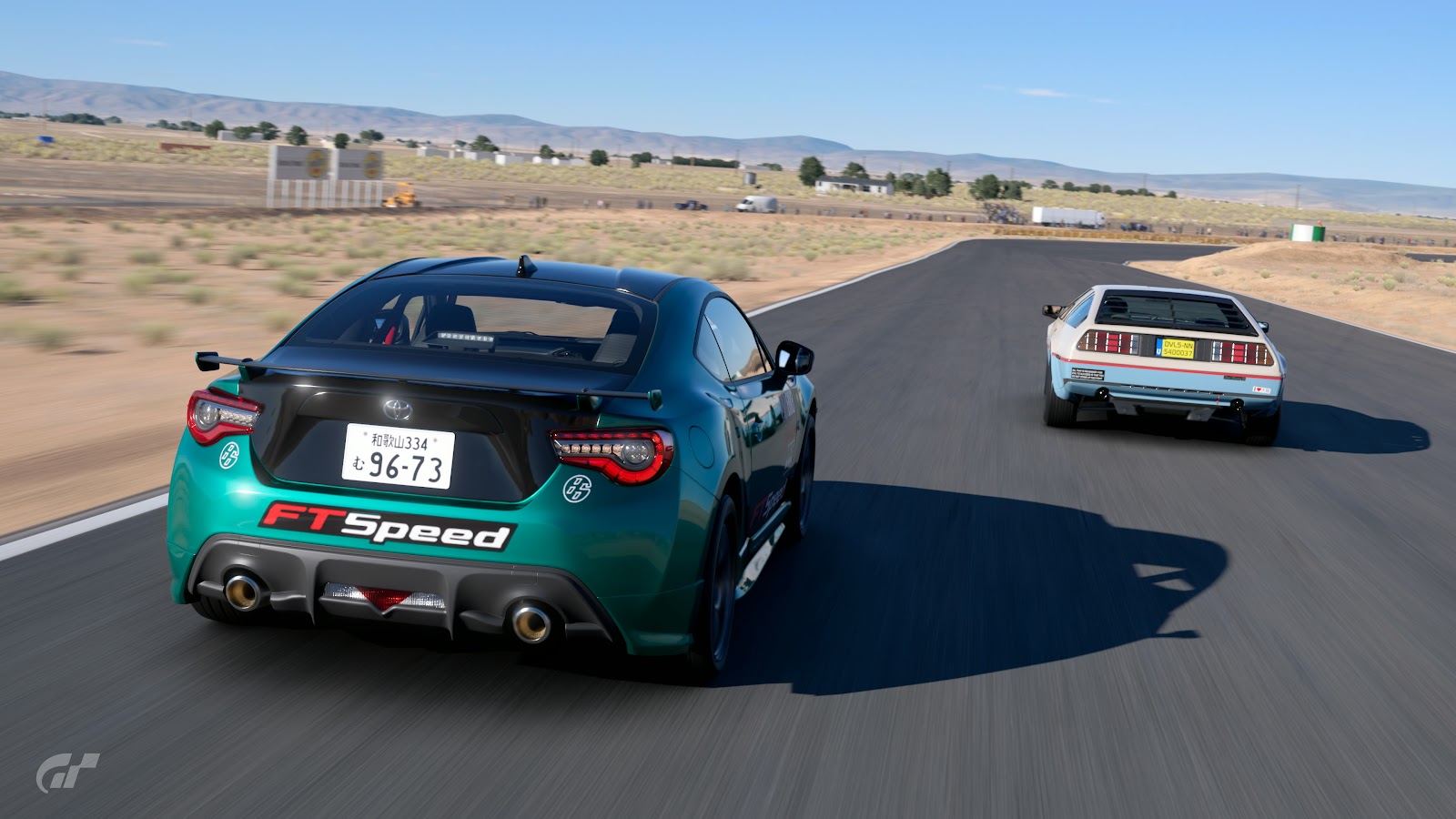
Now, you might think that a modern day resuscitation of an 80s icon might not have many rivals to compare it to, but I have not one, but two cars this week which I feel are apt comparisons! The Toyota SPRINTER TRUENO GT-APEX (AE86 Shuichi Shigeno Version) '00 is likewise a boxy, lightweight 2 door rear drive sports car born in the 80s, made into a cultural icon via a work of fiction, and touched up for the turn of the millennium. The Mazda RX-7 GT-X (FC) '90 is... a turbo RX-7. It's a well regarded sports car.
How does the steely DeLorean stack up against these two benchmarks of performance?
At first, I thought to myself, "yeah, no way I'm going to be able to work the 86 into the review as a comparo car; it's way cheaper at 120k Credits, the base car drives SO well, it has more power, less mass, and even with a Comfort Soft tyre downgrade, it sits some 50PP above the DeLorean." Of course, I thought that before having driven the damn thing, because when I did drive it, I found it to be an abhorrent pile of garbage that I will never again touch in "stock" guise. It oversteered badly on corner entries and exits, couldn't put power down, couldn't turn, and got left behind by the DeLorean if there wasn't a lengthy straight to reel back in the time travelers. After an ultra embarrassing outing at Streets of Willow, a track I chose, I swore to myself I am NEVER again going to touch this piece of crap without a tune. I would even go as far as to say that the Shigeno 86 is the perfect example of a car ruined by mods, and it makes the S2 look like a freaking rockstar just by giving context of how badly someone can muck up a car; the Shigeno 86 had an excellent base car to build upon with a sensible layout, but failed so badly, whereas the S2 had an infamously garbage base with a layout that only Porsche can make work, yet fought on equal footing against the Shigeno 86 around Streets of Willow all in spite of common sense and statistics going against it.
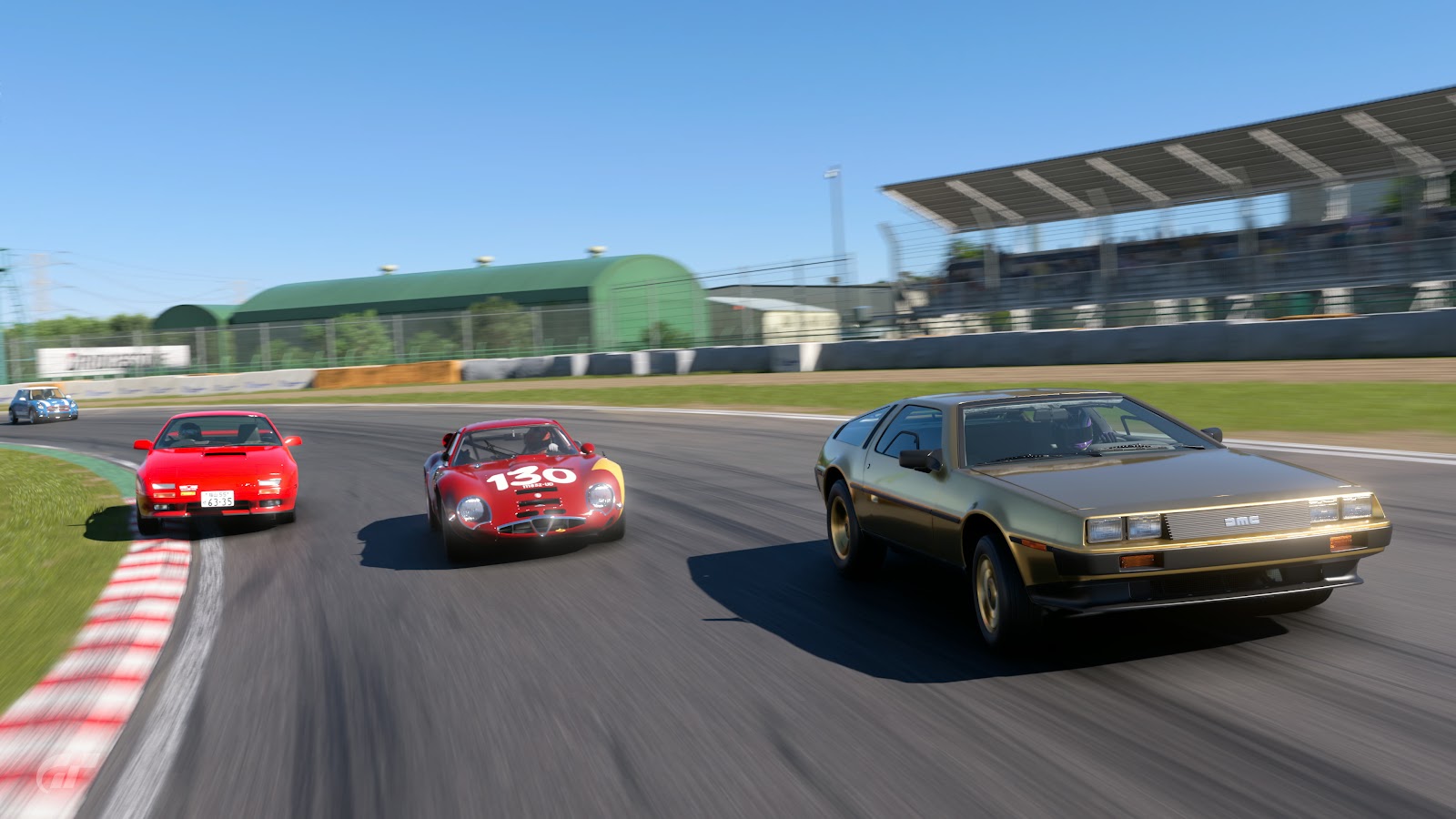
The FC RX-7 from all the way back on Week 1 of GT7 Car of the Week however, is a much more competent rival to the DeLorean. Sporting a Wankel Engine, the FC RX-7 not only gives a peek at what could've powered the DeLorean, but as an 80s sports car itself, also what a fully realised DeLorean could've been competing against. Being late to realise its potential in 2004, one could say that the DeLorean went forward into the past to do battle against the Mazda RX-7 at Tsukuba ;)
In a comparison between an FR car and an RR car, one would reasonably expect the FR to be the easier, more composed, and much more predictable drive, but instead, the unconventional rotary rocket flips the script by being the rowdy, lairy car of the two, one that never lets its driver let down their guard, holding a knife edge with a snappy arm to the driver's throats to make sure that they never mistreat the car and always have a flick of counter steer primed at the ready. Despite being the lighter and much better balanced car, the manga meister loses marginally to the movie megastar in the corners, only eking back out a small time advantage on the straights with its combined power and mass advantage over the DeLorean. Of course, that's the result of my own testing, and Vic didn't get the memo. The best I could do was to hover between 0.7 to 1 second to his gold plated glare machine at sunny Tsukuba. But hey, it's Tricky to hang with Vic, to hang with Vic in spinny bricks, it's Tricky. It's Trrricky. I did outrun every other DMC in the race though, for what it's worth!
Cars made famous by movies tend to be pretty shite in real life; think of your Pontiac Firebirds, your Lamborghini Countachs, and your Dodge Chargers. These movie star cars are pretty much the embodiment of the saying, "never meet your heroes". Someone has clearly met their hero with the original DMC-12, and they did a fantastic job of making sure that everyone who was inspired by a DMC-12 had a suitable hero to look up to in creating the S2, outperforming contemporary machines both in pace and ease of use, and even being able to hold its own against modern sports cars like the GT86, all in spite of the fact that it's an RR car. If all the S2 did was to bump the power of that abysmal engine, I think the original DMC-12 could've genuinely been a world beater, if things had gone just slightly better for John DeLorean and his company. For a passion project by a small, independent company, and for the end product to have been so, so good, I think that half a million credit asking price is... begrudgingly justifiable.
That police chase footage? Not sure what it’s source was, but the same footage has a Mustang in it in the Wired Mill Blackbird video.
The fact that they superimposed this Vision GT car onto tracking vehicles is just funny, but still neat.
@BrainSeepsOut 7 years ago
Except it wasn't tested in the real world. The car is CG.
@openh20 8 years ago
tested in the real world my ass.. too bad the video is full of holes.. Gurlain is driving a whole bunch of other cars in this one in the in car shots.. the telemetry is loaded into an R56, the desert shot is in a countryman or paceman.. unveiled and fake tested in the real world.. there is no real car.. it's all animation. #tease
@Skakhti 8 years ago
Fake sounds, fake car, sudden car horn and alarm at Nurburgring and a lame ass police chase.
This trailer is just bad.
********************
"So, that's your job this week: go out there and test the car", explains Esther the editor in her usual deadpan business demeanour.
"How's that different from any other week?", I asked, wondering why the heck I was called in to basically be explained my job as though a new intern.
"You don't have to go so hard like last week with the specifics, and definitely no need to slag a whole company in the process. Just the fact that you, a real person, have gone out there on the track and tested it, is more important for BMW's marketing department today than any constructive feedback", explains Esther, seemingly more in her element than usual. "They've no plans to iterate or improve on the car because it's not going to reach customers' hands. Basically, they just want to be able to say, "Tested in the real world" without being liable to get sued for it; doesn't matter if the car is good or not."
I scowl. "You're basically telling me not to slag the company while immediately giving me nothing but reason to slag them the very next sentence."
"It's just another one of those days in the office when you can take it easy. Just say something generic like, "the car is very powerful. I enjoyed my time with it" or something like that. We normies usually like days like these. Do you not get easy days as a racing driver?", quips the editor.
"The entire JD of a racing driver is to go as hard as you can for as long as you can, Esther."
"Yeah, well, learn to relax a bit. You're not a racing driver anymore."
"Shut up."
Esther pauses for a moment when neither of us are looking at each other before continuing: "I'm sure top F1 drivers are parrots for their sponsors, too."
I grimace. That was the one part of my job I was downright terrible at. If a car isn't performing, you don't treat it with kindness or pretend nothing happened; you identify the problem and make changes. Why do people want to be louder than racecars, and yet still be so fragile?
"Fine! I, a really real person, am really going out into the real world to really test the very real Mini Vision Gran Turismo really thoroughly!", I spat out.
"Oh!" The usually calm and petite Esther perks up with a slap of her lap as she remembered something, springing to her feet. "Speaking of sponsors, we've declared this week Barbie Week on Car of the Week, so... um... please don't..."
Esther scurries over to the door linking the office to the garage, just a hint of excitement pepping her steps. She then opens the door and scoots aside with a single, fluid motion, sheepish smile on her usually expressionless face to reveal my fate for the week.
"...be mad?"
I suck in a deep breath to complain, but sighed it out instead. "Long as it drives well and I don't have to look at it". I strode past Esther without taking my eyes off the car. "At least they tinted the windows. It's almost like they're aware how little anyone wants to be seen in this, god forsaken livery or not."
"Safe testing!" came Esther's voice from behind. She somehow sounds different when she's smiling.
"Not much a racing driver can do if an untested prototype for a marketing stunt explodes mid drive."
Stagnant silence. Expecting some chide remark by now, I turn my whole body to see what was holding her up.
"Don't scare me like that...", came her quivering voice.
"...sorry. I'll survive."
********************
The Real World Test of the Mini Clubman Vision Gran Turismo
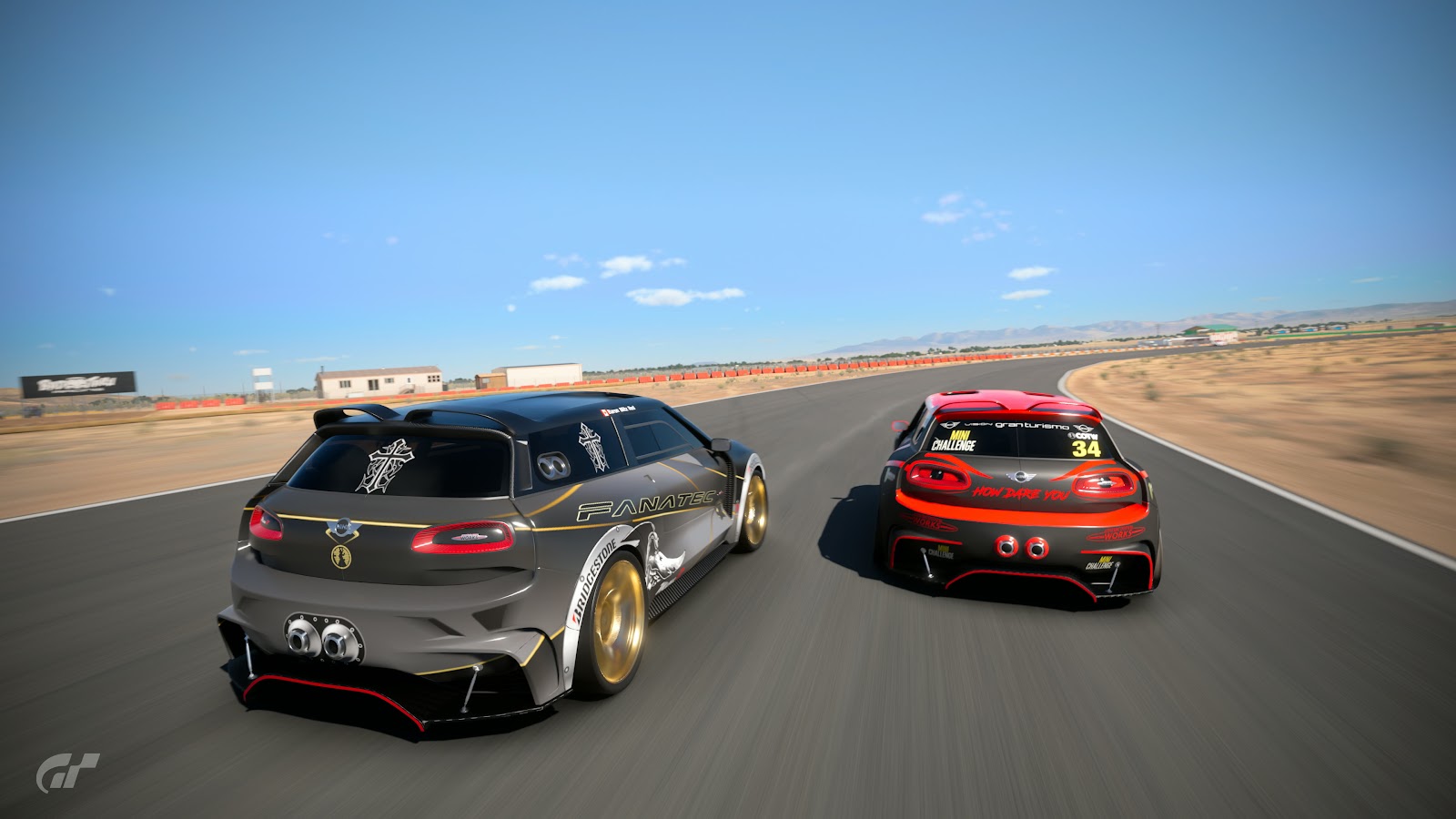
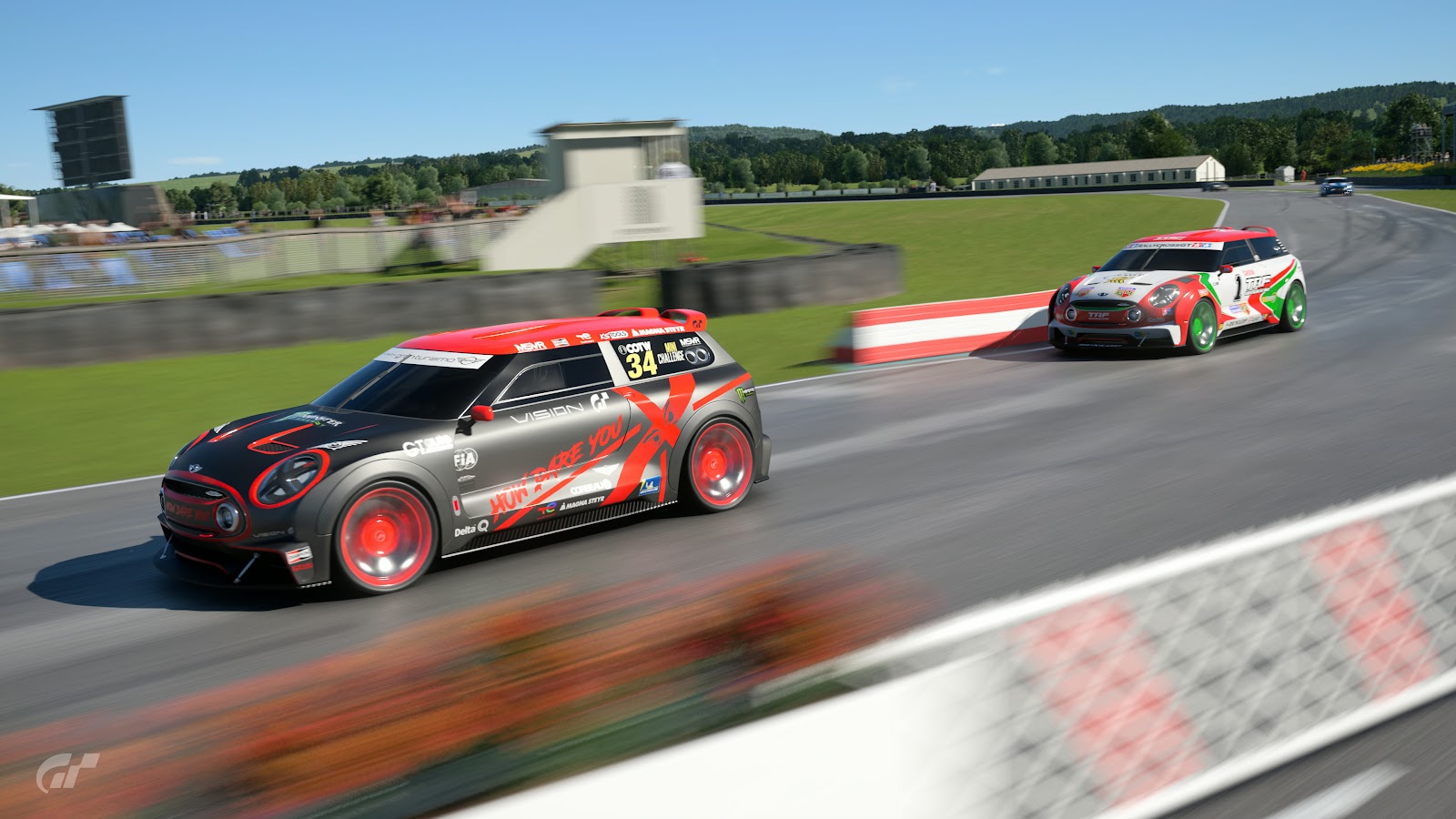
The Mini Clubman Vision Gran Turismo is a car. You press on the go pedal and it goes. You press on the brake pedal and it slows. You turn the wheel and it turns. I can confidently tell you this from my experience with it in the real world.
********************
"Lee what the f- HOW DARE YOU! I can't publish this!", explodes Esther the editor. She's been having more and more moments like this in the office lately for some reason. "Why can't you just learn to work with others and say some nice things once in awhile?! It's not that hard!"
"It IS hard for me to lie and say I liked my time with this crap car!", I shot back. "If they want me to say nice things about their car, how about they make a nice car? "It's not that hard!" The 2005 Cooper S won our Car of the Year award last year!"
"You're not a racing driver anymore, and no one is your mechanic! Stop screaming! We don't owe you anything!"
"I'm still good at what I do, and I'm going to prove that to you week in, week out!"
"WHY?!"
"Why?! Why else do you think I was hired for this job? I'm not good for anything else!"
"Oh, Lee, you...!"
The editor turns her back to me to hide her face, returning her stern gaze to her laptop, when she notices a second, bigger attachment to the email and opens it.
"You can cut out the offensive parts as usual. I don't do easy days in the office."
"Mmm."
"Can I go now?"
"Mmm."
********************
The Mini Clubman Vision Gran Turismo is a car. You press on the go pedal and it goes. You press on the brake pedal and it slows. You turn the wheel and it turns. I can confidently tell you this from my experience with it in the real world. I chose to introduce you to the car this way, dear reader, because the car is entirely devoid of any personality like an overly protected and controlled child.
Before I could even open the door to our garage, I've had to get my ears talked off by BMW reps regarding ground rules: no touching the ride height, camber, the centre diff, individual gear ratios, and even the bloody WHEELS on this. We had our consultant from Understeer Engineering with us during testing, and they confirmed with me that they only parts they have in their catalogue that would fit into the car no issue are tyres, a hydraulic handbrake, ballast, and power restrictors. No, not even bloody Nitrous Oxide. At this point, I'm surprised enough to learn that BMW will at least allow me to change the tyres on this car after each testing session. These guys make Ferrari look like the leaders of the free world, sweet baby Buddha.
As you might expect from an upbringing with such controlling parents, the Mini VGT handles extremely neutrally. The car turns until it doesn't turn anymore, at which point understeers. The tabletop torque "curve" that is signature of BMW's latest models almost makes it irrelevant when the Mini VGT upshifted, as long as it's somewhere within the last 500rpm, and it sounds like a soulless office prisoner at a dead end, routine job who just contracted anal cancer farting into a cabinet.
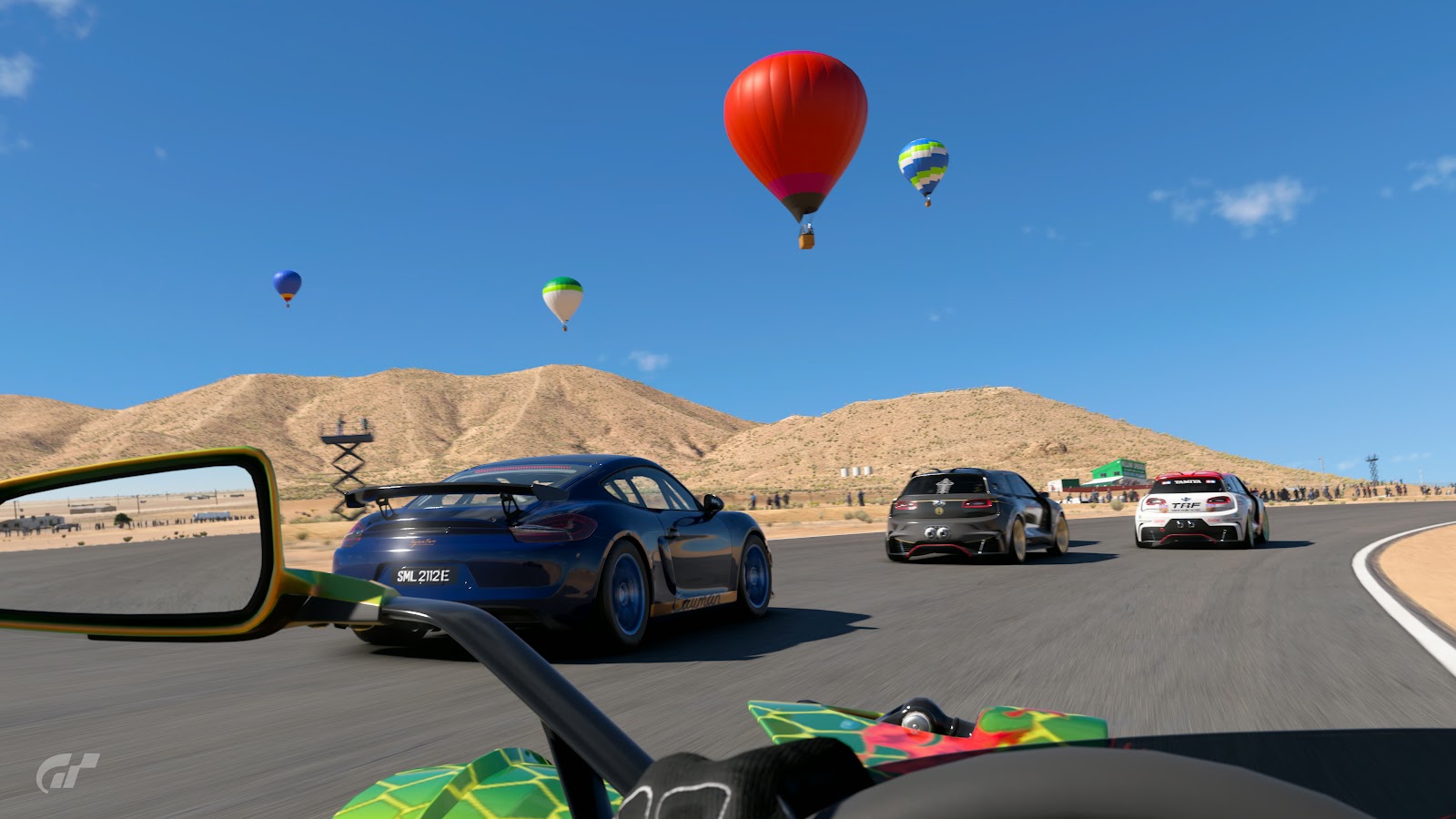
It has 388HP (289kW). It weighs 1,050kg (2,315lbs). It has a 6 speed sequential. It can do 0-100 in an as–tested in the really real world, 3.1 seconds on the hard slick tyres it comes with. Its pace around a track very closely matches that of a GT4 racecar, such as my darling, beautiful, engaging, and involving Porsche Cayman GT4 Clubsport when unfettered by Balance of Performance, which puts the really real Mini VGT a peg above Gr.4 racers in sheer pace with or without BoP. The trade–off is that Gr.4 cars can install approved forced induction and even nitrous systems to bring their pace up to rival those of some of the slower GT3 cars, but that is simply out of the question for the Mini VGT. As a very real consequence of this, the car sits smack dab in the middle of no man's land at 648.10PP, meaning it has to bend over backwards and uncomfortably cripple itself to fit into 600PP events, or be running at a severe deficit to blue flag things it has no business sharing a track with. In either scenario, it feels like a fish out of water and struggles to belong anywhere.
But, while it can hang with GT4 racecars in terms of one lap pace, there isn't a chance in hell I'd take the Mini VGT over a bona fide GT4 racer; it has tyres that look no wider than the narrower front tyres of my sensible Cayman GT4 Clubsport, and yet it has more of its weight over its front axle than my RMR Cayman has its rear percentage wise, with 58% of its body mass sandbagging the front end. With grip at a premium in the Mini VGT and overly stressed front tyres, trail braking is a bit of a notable weakness with the car; despite it stopping well, the front tyres quickly give out when introducing any steering angle under full braking, which means drivers will have to almost fully come off the brake pedal for the car to bite into a corner. The extremely neutral Mini VGT is also weirdly prone to sliding when hard braked with its outside wheels on some of the more raised and textured rumble strips going into a corner, such as the ones found in the really real Dragon Trail Circuits; a behavior I haven't been able to replicate with the spare Gr.4 cars I had on hand in the office, from my similarly F–AWD Turbo 4 Banger Atenza Gr.4, to my impeccably balanced RMR NA Flat 6 Cayman GT4, with only a hint of this slippery behaviour being observed in the hatchback FF Gr.4s, and not nearly to the catastrophic extent of the Mini VGT. Not being able to use the outside kerbs to open up a corner more during entry just adds yet another reason to have to brake earlier. Thankfully, the Mini VGT actually came to us with an adjustable Brake Balance Controller, which does help somewhat in alleviating that understeer on turn in and preserving the front tyres.
Unfortunately, said premium for front end grip is also felt during corner exits, and as previously mentioned, the centre differential is unadjustable in this car, with our consultant from Understeer Engineering confirming with me that they have no existing parts in their catalogue to replace the tyrannical unit in the Mini, damning it to an eternity of a criminally conservative 40:60 front to rear torque split and power understeer. The only way to prevent the front outside wheel from spinning and washing wide then, is to be similarly conservative (i.e. slow) with your right foot, with no hope of inducing a bit of slip on the rear to help with the situation, leaving the only recourse from power understeer backing off and waiting it out. Have I mentioned how boring this car is to drive yet? Or how much I'd rather be in any other non–FF Gr.4 car?
Almost as if being thrown a bone by the hand of fate, only to have it yanked away as a cruel joke, the Mini VGT is capable of equipping Dirt tyres, but it's hopelessly terrible on dirt; and that is if you can somehow find a tyre manufacturer that will make you a bloody 21–inch offroad tyre with virtually no sidewall. Packing AWD and 125mm of unadjustable ground clearance despite the fact that it sports a "Fully Customizable Suspension" in its caricature of an SUV silhouette, the really real Mini VGT tries to be both a track day warrior and an off road specialist both at once, with really, really miserable results: the stiff racing suspension that gives the car its racecar rivaling immediacy on paved asphalt means that it's impossible to get any weight transfer done on dirt, making the SUV slide like a whale in a mudslide. While the spring rates and dampers can thankfully be adjusted to fix this issue, and the engine has enough torque to break grip on all four corners with a boot full of throttle in spite of its fixed individual gear ratios and conservative centre diff, why anyone would choose to modify this for dirt racing over something much cheaper, adjustable, and eligible for dirt events is something I don't claim to know.
And so, what we end up with is a car that has the pace of a GT4 racer that can go on dirt, yet is ineligible for Gr.4 or Gr.B racing. Many hosts of events in Seven Haven frown upon rides that aren't production cars, and those that don't mind will require the Mini VGT to horrendously cripple itself with extremely limited adjustability to its parts to make up for that, which I'm sure will drive away many tuners looking to flourish in the laxer rules of PP limited events. The Mini Vision Gran Turismo is a really real car that really exists, that has been tested in the real world, and the inevitable conclusion I've come to from my really real testing of it in the real world is that it isn't good for anything and doesn't belong in any reality.
********************
"You can't call this an honest review when you're transferring so much of your own self hatred into your writing, you idiot..."
Many may posit that fictional concept cars in a video game are a marketing tool, but just like YouTube ads, being shoved these products when I specifically asked for something else is just going to make me despise the product you're pushing. We could've had a Prius GT300, a C8.R, or A110 GT4 just from cars that already exist in the game, but nooooooope, here's a vapourware car from a country Polyphony Digital pretends to acknowledge the existence of once every few years, and to transform it into a Gr.3 car, they've even had to turn it from an EV into an ICE.
And it's like whoever had naming rights to the car had never even seen a Gran Turismo game before, let alone sat down and played one; the Gr.3 and Gr.4 adaptations of the X and G70 respectively are called the "X GR3" and "G70 GR4", instead of "X Gr.3" and "G70 Gr.4". Did something got lost in translation, or did someone REALLY not care to such a baffling extent? Last I checked, "GR" in this sport most commonly stands for "Gazoo Racing", the motorsports division of Toyota. Did they have a hand in this? Isn't the original car supposed to be an EV? Why does it have intakes big enough for 3 internal combustion cars up front? It's almost like BMW and Lexus had spite sex slapping each other's ugly faces silly before procreating, and this was the abomination that spawned from that passionate night.
And what does PD do to publicise their newest official partner and show them off in the best light? By putting it in the Circuit Experience of the (then) newly added Watkins Glen track, where it had a setup that understeered it into the ire of many players. Oh, and Genesis as a manufacturer would be guaranteed a spot in the GTWS events, being an official partner, robbing yet one more grid spot from a better deserving manufacturer. Just as "pay drivers" in Formula 1 are the most revered and beloved, so too I'm sure will these "partner manufacturers" be in Gran Turismo.
You'd think that maybe having even a single Scape location in South Korea to shoot these Korean cars in would've been nicer than all that crap.
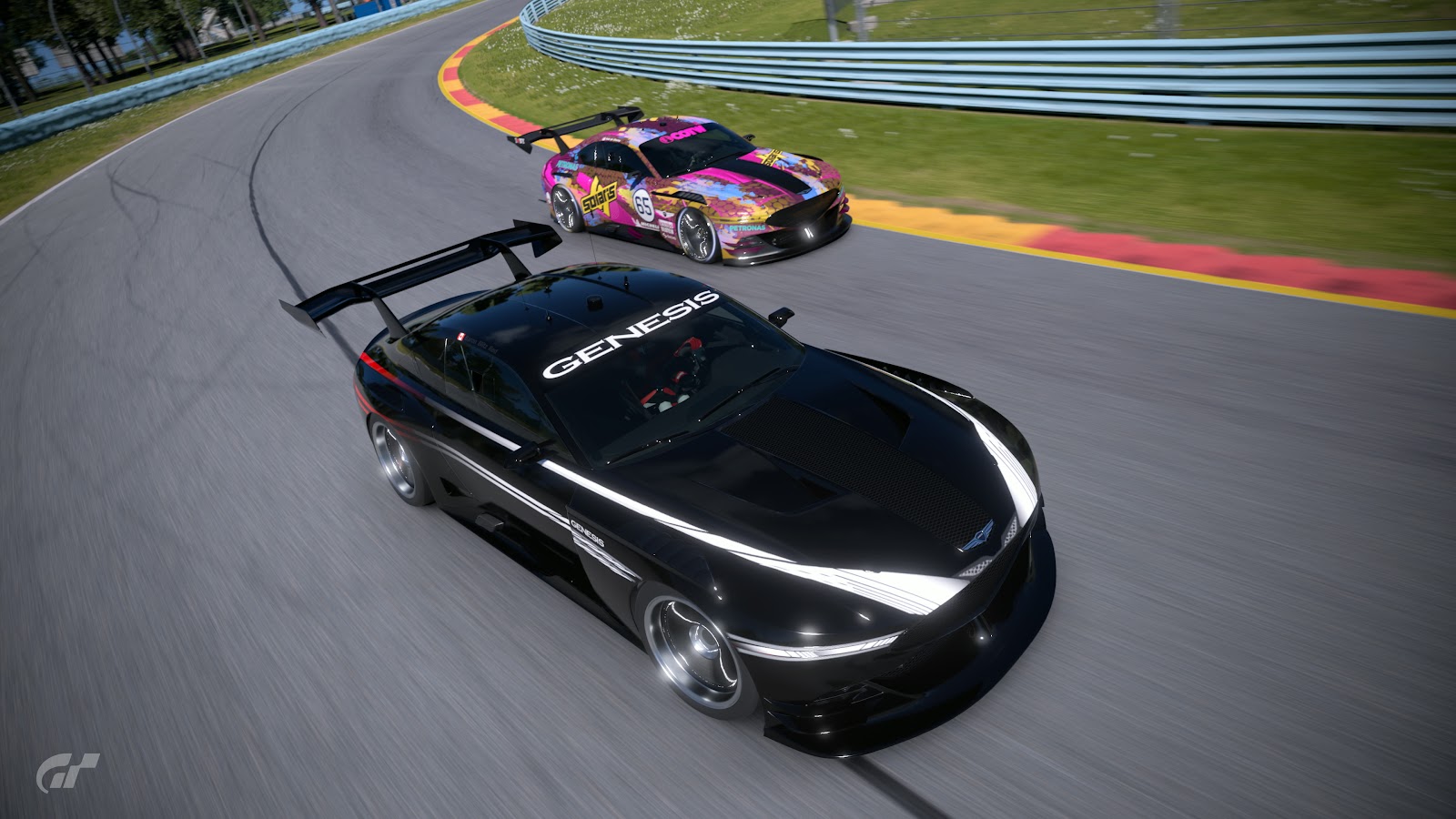
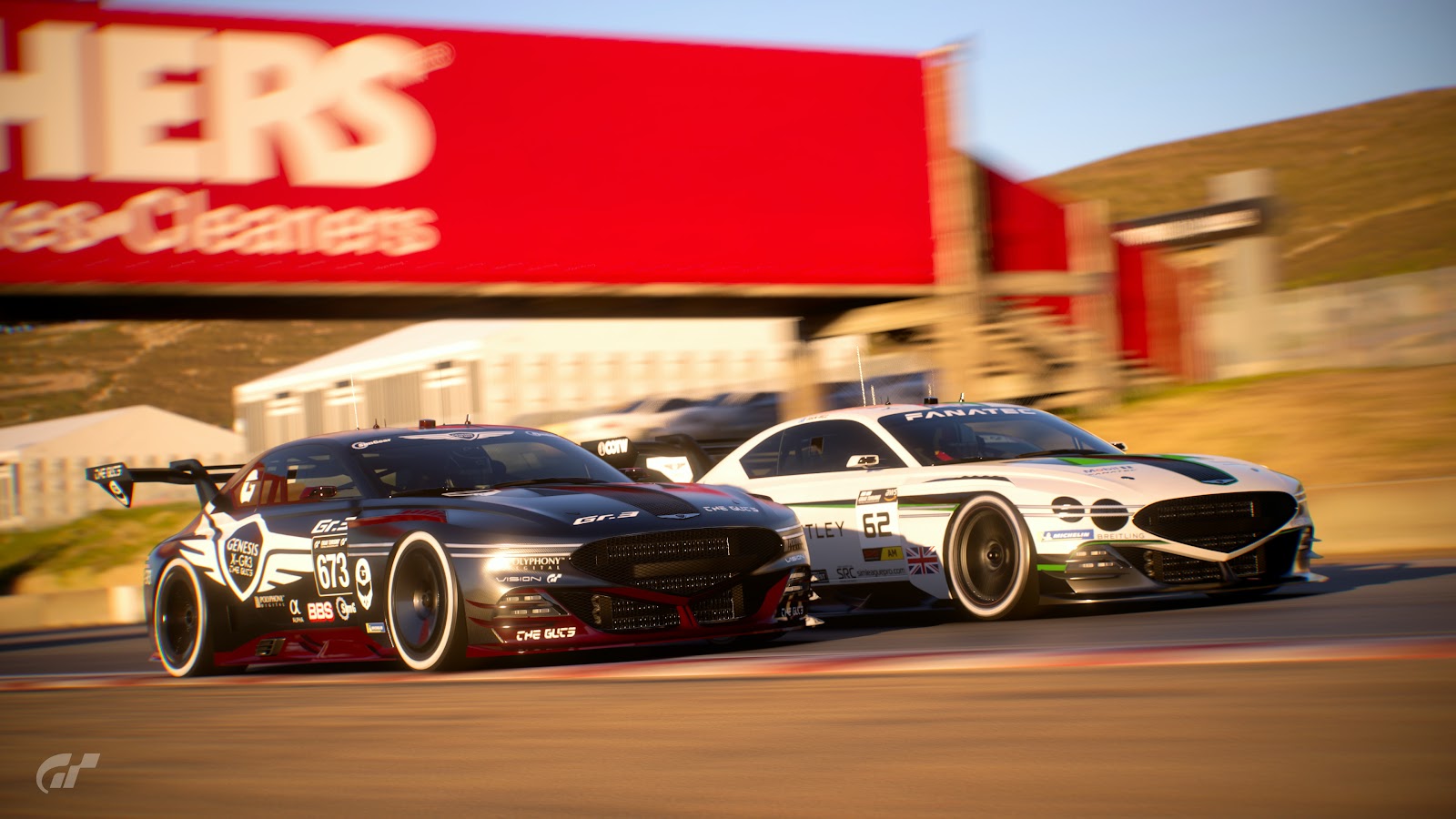
Originally an EV, the X GR3 has been given a nondescript, barely named 3,342cc turbocharged V6 engine for racing duty in Gr.3, outputting a suitable 547HP (408kW) @ 6,500rpm (525HP, 391kW with BoP at the time of writing). While the engine makes V6 noises and can actually refuel in a pit stop, the turbocharged powerplant delivers its shove in a way that feels to me like it's trying to emulate an electric motor, with its peak torque of 697N⋅m (514.1lbf⋅ft) being available at just 3,000rpm, from which it continues to deliver that tabletop shove all the way till shortly after the power curve overtakes the torque curve at 5,252rpm. This makes the GR3 a very punchy car, one that often feels like a drift car to push out of corners, as the engine always wants to twist the driver's narrative with its abundance of torque, and it does so mostly without even being vocal about it, like a silent killer lurking in the shadows of the low rev range. This forces the driver (well, maybe just me...) to either exercise paralysing paranoia out of corners, or simply use TCS1 to take off the brunt of the bite and replace it with some consistency. On the plus side, that sustained shove does mean the car is very receptive to short shifting to save fuel.
I just prefer the NA V6 of the Hyundai Genesis Gr.3 though, both to drive and to listen to.
I'll admit to never having done a single Sport Mode race in GT7, and hence my understanding of what's currently good or "meta" is limited to Super GT videos. From my understanding, the M6 has always been strong in a straight line, and so colour me surprised when I brought said M6 to a speed track like Tokyo East, and could barely gain on the GR3 in their slipstream! Around Daytona, the poor, forgotten Hyundai Genesis just got dropped like an abandoned kids toy by the Genesis X GR3. I think it's strong in a straight line, just not Supra, GT-R, or Viper levels of strong, but I could very well be wrong about this.
All told, the X GR3 is a passable, acceptable, nothing notable car that has its corresponding strengths and weaknesses; fast in a straight line, but sketchy in the corners... or at least, it would've been, if it didn't have an almost literal Achilles Heel: its rear differential.
Remember the drift car analogy I made earlier? I wrote that the torquey engine busts out the rear end of the GR3 very eagerly, but it's actually the differential of the GR3 that makes it more of a drift car than its engine, which is set up as though the GR3 were a GRD; even moderate power application with the steering wheel turned just initiates a slide, as though an athlete trying to run with both their shoes tied together. This of course makes it difficult to put down any power out of a corner, but the car also becomes incredibly upset by bumps, kerbs, and sharp elevation changes, making corners that involve those extremely difficult, if not risky, to exploit fully, such as the Inner Loop of Watkins Glen. Going over the rumble strips of the Inner Loop feels like a gamble, as there's about a 50/50 chance the car simply won't land nicely and snap off into a spin if there's any yaw angle at all when landing. The Corkscrew of Laguna Seca deserves special mention, as that's almost a statistical guarantee that the car will snap off the sharp downhill right hander, even with an early upshift into 3rd gear.
It's not just corner exits that the rear differential screws up; it's also the corner entries. As noted by many of us in the lobby this week, the GR3 understeers A LOT. But I had an epiphany when I drove this thing down the Chute of Watkins Glen, a long, slightly downhill left hander leading away from the shortcut course, where the front tyres gripped ferociously, with no juddering on the very heavy steering wheel to indicate the front tyres slipping. Yet, there's a very distinctive skipping sensation and an intermittent squeal from the inside rear tyre when you turn too much and overwhelm the rear end. In other words, the front tyres are actively having to fight the rear tyres at literally every turn to simply get the car round the corner, and without the aid of a downhill taking some weight off the rears and dumping that up the front, the tightly bound rear tyres simply can't be overwhelmed, resulting in vehement understeer and insane tyre wear, not to mention making the car wholly uncompetitive and hazardous. Despite the GR3 being on the slightly light side of Gr.3 at 1,280kg (1,318kg, 2906lbs with BoP at the time of writing), the Genesis feels incredibly heavy to maneuver around a track, especially when driven with a steering wheel because the front tyres have to constantly wrestle the rears. Even similarly sized luxobarges like the M6 GT3 and RC F GT3 feel significantly lighter both to steer and to maneuver around a bend.
To test my theory, I simply lowered the LSD values from the Gr.3 standard of 10-30-20 to 5-10-5, and almost ALL of the car's problems immediately vanished; the crippling understeer, the twitchy oversteer, that disastrous snapping down the Corkscrew, the nervousness when taking kerbs... you name it. The only problem that loosening the LSD didn't fix was the god awful look of the car, and the disgusting taste it leaves in my mouth with the realisation that 90% of the car's problems can be fixed by just a quick, simple tweak. After all, this is fictional car made specifically and exclusively for ONE GAME, and yet it has 2 glaring, yet easily fixable faults in said game, with its name and rear differential. It begs a few questions, doesn't it? Did no one test drive this? Who signed off on it? Have they ever driven a racecar before? Why is it being showcased in the Circuit Experience of Watkins Glen when that track highlights its flaws so dramatically? Why is this turd guaranteed a spot in GTWS events? What does it share with the X concept car, aside from looks? Is the X going into production? What are Genesis trying to promote? Am I supposed to experience this and think to myself, "Hmm yes, I do think I quite want myself a Genesis product over a Merc or BMW!"
The Genesis X GR3 is an annoying marketing stunt, looks like a turd, drives like a pig, and it just reeks of negligence from its creators. If even they don't care about it, why should I, or anyone else?