Saturday, 29 June 2024

GT7 W62 & 63: Red Bull X2014 Standard Car & Lamborghini Miura P400 Bertone Prototype '67

If you think about it, it's a pretty bloody amazing miracle that we human beings are capable of operating motor vehicles; after all, our fleshy prisons were never developed to be able to propel itself to dizzying speeds like 30km/h, and yet our brains can process audio, visual, and sensual information quickly enough to go way faster than that. Of course, without rigorous and routine training like the ones Formula drivers undergo, our spiteful mortal vessels will start to give out past certain g levels, but even the fastest of sanctioned racing machines can only pose a moderate challenge to our neural processing power through a screen. I can still notice things like grip limits, understeer, oversteer, differential locking, downforce imbalance, or, hell, even zonk out and daydream a little on the straights when driving an F1 car in a simulator.


#singapore #nations #gtws

Absent any building costs, fear of pain, and the rulebooks that result from the hinderances of reality, the Red Bull X series of racecars seem purpose–built to challenge that mental limit of processing speed in us sim racers, to seperate the truly gifted freaks of nature from the ones that simply work hard and dedicate. Even though the X2014 model is tamer on paper than the X2011 that preceded it, it's still capable of mind–bending speeds that is well past what my brain can handle. I am utterly incapable of even thinking to myself when attempting to drive it, let alone try to put any of it into words.


I cannot fathom where its grip limits are, let alone how to explore and find them in a safe manner. Don't ask me where it makes healthy torque; I don't even remember how many gears the thing has. Straights in most racetracks pass by faster than I can let go of thoughts of the previous corner; every bend feels like consecutive corners in the X2014, and it'd take a straight as obscenely long as Fuji's home straight for me to take a deep breath or two in before the madness begins anew. Yeah, the brakes work. The brakes work so well that it might not just be the car they stop. This thing has so much downforce that it can literally oversteer up Eau Rouge—no, I'm not talking about the back end of the car stepping out—I mean, the car can literally turn too much and hit the right hander apex of Eau Rouge at a 45° angle doing 320km/h if you thought common sense things like steering resistance and laws of physics would stop the X2014. Trying to drive this thing with common sense and experience with other cars will completely neuter the X2014—its magic is allergic to common sense. Just know it. Trust it. Keep the throttle pinned. Steer it into that corner flat out, but don't expect the steering weight to fight you, so be surgeon precise with it at 300km/h. Following another X2014? Cope, I guess. Death is just a restart, not an end.


Every microscopic twitch and imperfection of my input is magnified and displayed faster than I can even realise my mistakes. An imperfection that might have resulted in dipping half a wheel past asphalt in a typical Gr.3 racecar will see the X2014 taken clean off the circuit. At the end of each drive, I am drenched in sweat, I am breathing heavy, and I can hear my heart race, not at all unlike having just been through a life–threatening fight. This thing drives almost as though it were taken from some arcade racer, and yet it has more rooting in reality than your typical Vision Gran Turismo faff, easily vacuuming the track of marbles with utterly bonkers sci–fi make believe contraptions like the laser–propelled 2X. It's only at low speed corners where it starts to resemble a sane, normal formula racer, absent the downforce–generating fan of the X2011. At speed, though? Don't even bother with the default panning mode of Mode 2 when shooting photos of the car, lest you get an indistinguishable blur. Either bump up the shutter speed or use Mode 3.

Mode 2 panning at 1/60s shutter speed at Maggiore's Banky Boi corner. The X2014 was doing 140km/h.

The fact that there are people out there with the mental processing speeds to handle the X2014 and even the Tomahawks really made me realise just how hopelessly average I am, and it'd be a pretty depressing thought if that sadness wasn't mostly drowned out by respect for both the machine, its creators, and the people actually capable of doing it justice.


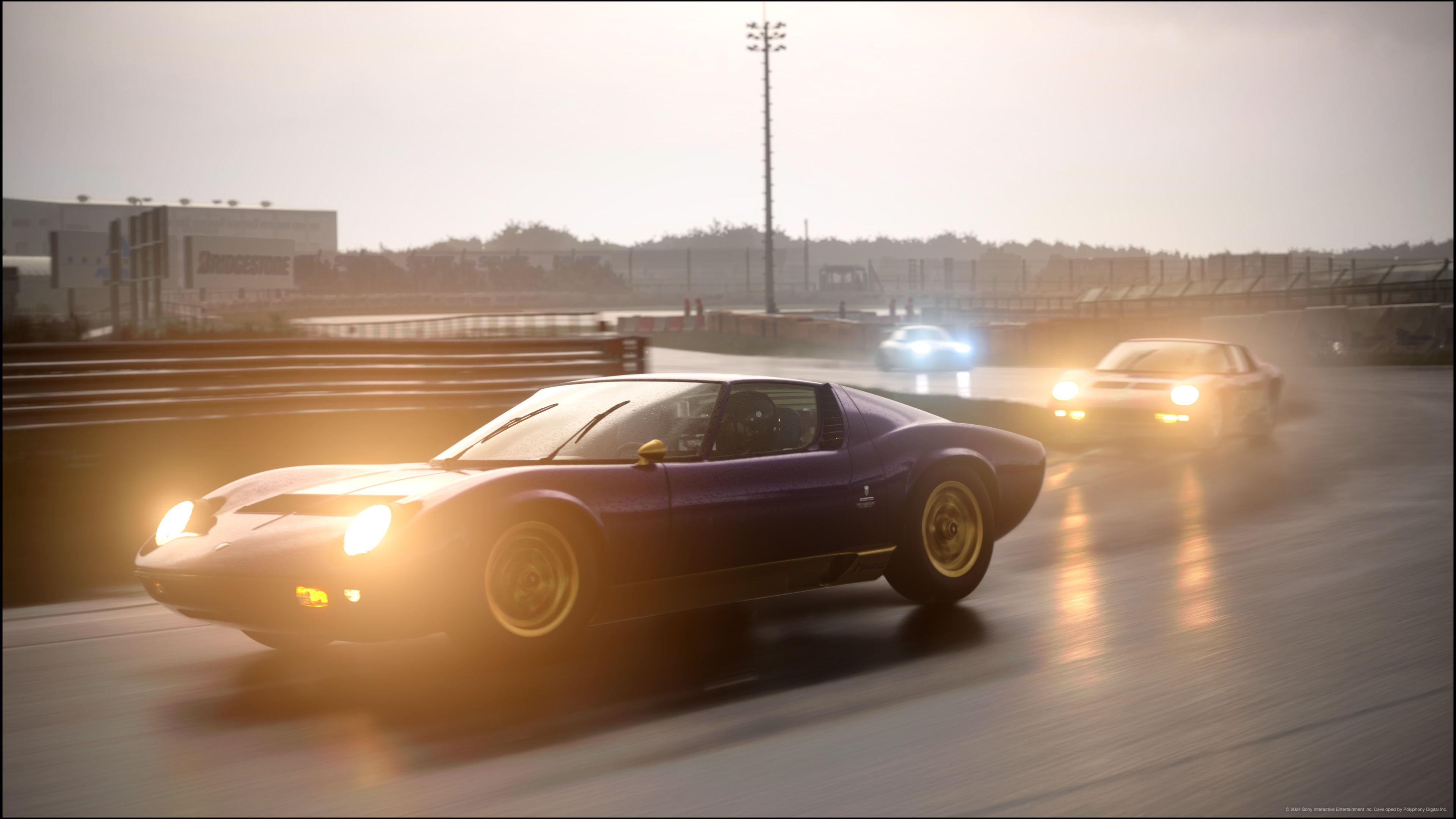
And then there's the 1967 Lamborghini Miura P400 Bertone Prototype. While the X2014 overwhelms with unreal capability and immediacy, the Miura almost literally swings the entirely opposite direction. Packing a "mere" 349HP (260kW) and weighing in at just 980kg (2,161lbs) in–game, it's certainly not fast in the grand scheme of things, but I would still argue that it, much like the X2014, is a magnifying glass for driver skill that greatly exaggerates even microscopic skill gaps between players. I say this because this is one of, if not the most difficult cars in the game to drive, giving drivers microscopic margins for error and demanding an unreasonable amount of knowledge and precision in its driver. In the hands of someone like me, it's downright hazardous to drive even at middling speeds with every precaution taken.


Being the prototype of the first road legal rear mid engined road car, it's understandable that a lot of rear mid engined quirks and tendencies feel completely unaddressed and unmitigated in the P400. Even mild trail braking with default ABS will pull the rear end out screaming and thrashing, and there is absolutely zero safety measures in place to keep the Miura from swinging its tail out as though trying to whip itself if a driver turns too much on the brakes. Long, sweeping corners with deep apexes, such as... oh I dunno, the entire last sector of Fuji, are an utter nightmare to find and meet while babying the Miura's rear end. It forces drivers to have a smidge of throttle applied almost immediately after peeling the steering wheel off–centre for a corner—well before the apex—to keep some weight pressing over the rear tyre, more than a smidge if the revs are low. But be ready to ease off that throttle pedal when the car straightens out and the revs climb, because once this prehistoric NA V12 engine wakes past 7,000rpm, you'll get... you guessed it: explosive, barely containable oversteer.


According to the game, the Miura has 0 downforce front and rear. That's a lie: it has less than zero downforce—it has lift. The production Miura is notorious for being extremely floaty at speed in real life, and in the game, it's one of the very select few cars that is both old and fast enough where lift becomes a real problem. The steering wheel goes noticably numb and muted in just third gear at around 150km/h, and the car will aquaplane on thin air in 4th and 5th, with the steering wheel light enough to turn 90° on the final left kink of Deep Forest Raceway after the pit entry while the car understeers into the outside barrier. The Miura needs to be tipped into a turn earlier and earlier with alarming increments once it hits its stride in 3rd gear, and lifting just a hint, even for a barely noticable moment, gets the car pointy again thanks to its soft suspension (and hopefully full tank of fuel). But of course, be wary of doing this as well, because the rear end of the car doesn't get any friendlier at speed. In GT Auto, the only aero parts available to a Miura are custom rear wings that completely desecrate the look of the car, which means that even if you wanted to, there's no fixing the airy front end of the car; it can only be made worse.


The Miura is a completely impractical car, even in the context of a racing game, not just because it's a pricey LCD exclusive, but also because it requires a skill level so high that none but the most skilled drivers can find any consistency and speed with it. For plebs like me, a modern day car with less power and more mass, like an NSX-R, would be much faster over a few laps. There's an old saying that goes, "work with the car, not against it", but to do what the Miura wants to do would be to tap dance on a minefield with the devil himself after you cucked his wife in secret. For everyone else, the Miura has to be fought vehemently as though their virtual lives depended on it. If you can manage it, or even exploit its tail happiness, I can't help but to suspect it's unreasonably, unethically fast. It presents itself as an unreasonably tough test for drivers that might be bored of more mainstream offerings, almost akin to the demonic Kaizo Mario levels in the gaming world. I have a torrid time driving it, but at the same time, I find it difficult to dislike the Miura: it's a car that asks of its driver to be so hyper aware of everything that is going on with the car, from weight shifts, revs, yaw angles, speed, and traits like that are often associated with the best drivers' cars.


That is to say, instead of me critiquing the cars, the past few weeks have flipped the table, and the cars have criticised me instead. And, you know what? Both those cars, for polar opposite reasons, made every other car feel slower to drive; the X2014 with raw, sheer speed, and the Miura with how quickly it lapses the window of forgiveness to its driver. I might even be brazen enough to say that these two cars have made me a better driver.

Saturday, 22 June 2024

GT7 W52 & 53: A Fortnight of Lamborghinis

I didn't want to review the "car" we had for Week 52.

I hate the all–consuming trend of S and CUVs. I think the vast majority of the people who buy those things have near zero use for any of the "Sport" and "Utility" of these Vehicles—if there's any to be found in those FF hatchbacks on stilts. I think most people buy these things just for show, and what car company is more showy than Lamborghini? When someone thought to put two and two together, the seemingly unlikely pairing of the words "Lamborghini" and "SUV" came together like air to a bird, the sea to a fish, and contempt to the contemptible, resulting in not the fastest running Lamborghini ever made, but the fastest selling one of the company's entire 60–year history. Yada yada, some context and history about Ferruccio Lamborghini never wanted to make sports cars, how the company made the "Rambo Lambo" LM002... Look, I get it. Doesn't make the Week 52 make any more sense or less of a poop stain to look at.

No, I'm not going to sully my fingers typing its name out. I do all my research on it in an incognito tab on another browser. I don't even feel this filthy browsing for porn. When I had to take a photo of the car to announce it at the start of Week 52, I didn't even shoot my own car. I don't want this brain rot and hollow showboating invading my life, my personal space, more than it already has. Seeing one in real life makes me sick. The only solace I can take in the Week 52 being added into Gran Turismo 7 is that I can adamantly refuse to own one, not even for a fleeting moment to fill my otherwise complete CarDex. In fact, that one omission in the 497–strong list as of Version 1.45 is something I take pride in. Yeah, it might seem trivial to be so worked up about not owning an inconsequential car in a video game, but I take the same pride in not owning a Week 52 as I do not relapsing into old habits or being rude to a retail worker. Sometimes not doing something is in itself, every bit an achievement as actually doing something. Not owning a Week 52, especially when I had everything else, was an achievement to me.

Was.

Vic then comes along and chose the Week 52 for Week 52 of Car of the Week. He held my family at gunpoint, my balls in a vice, and threatened to LS— no, EV swap an RX-7 before my taped open eyes if I didn't honour his "request". And so, the folks at Lamborghini became 300,000 Credits richer as their hired guns shook down a fallen and tearful pretend reviewer. They stripped me of all my clothes and took away all my means of payment and transport, and as a final "F–you", the only way could make it back home in the sweltering, inhumane heat was a Week 52 with my name, ID number, and blood type printed into its upholstery... in my own blood.

A more able man might have tried to make Bloody Marys with spilled blood in my situation by reviewing the Week 52, but willing myself into a Week 52 felt like dipping my soul into a pool of radioactive acid. All I can tell you is that first and second are uselessly short—2nd gear tops out at exactly 100km/h, which should be all I need to mention to illustrate the one purpose they're there to fulfil. The thing wants to be short shifted at about 6,2, and is completely soulless both to drive and to listen to. It stops really well for something that weighs the collective guilt of mankind's worst tendencies*. Drag completely nukes this thing past 230km/h (143mph). The front heaviness of this thing is somewhat mitigated by what feels like brake vectoring on corner entry, which means to say that it pushes harder than delivering mother cattle after the initial turn–in. Vic opines it's faster through a corner sideways than straight. Ask him for the details. I'm just a broken shell of a man stripped of all dignity, purpose, happiness, and hope in life.

*The Week 52 weighs 2,197kg (4,844lbs) according to the game. Those figures could be dry humour, as is the case with most Italian performance cars in this game. I'm not going to sully my search history with trying to dig up its kerb mass.

In terms of raw pace, it'd struggle immensely just to keep up with a first gen Audi R8 V8. Can you imagine actually paying 911 GT3 money to get spanked by a Cayman GT4? I'd say I couldn't if I hadn't been forced into actually experiencing it. I SUPPOSE it's the third fastest four seater in this game behind the Porsche Taycan and Charger Hellcat, and it would outlast the EV Taycan and be much easier to drive than a Hellcat. To drive, though? There's nothing exciting or even remotely pleasant about the driving experience. It's completely devoid of any sense of occasion, quirk, or personality. And that just doesn't scream "Lamborghini" to me.

Not like the 2000 Diablo GT.


#2000 #jgtc #gt500

From the moment I had to launch it from a standing start, this thing BELLOWED out character, and I'm not just talking about the sound of the showpiece 6L V12 slung aft the cockpit, either. As one might expect from a naturally aspirated unit that's capable of revving to a dizzying 8,000rpm, the NA V12 engine of the Diablo is completely lifeless below 3k rpm, waking up in a dazed stupor only past that. The complete lack of life in those low revs, along with its very tall gear ratios, mean that it's much more advantageous to turn off the makeshift launch control that is TCS and just modulate the wheelspin off a standing start—not to mention much more fun and engaging. Push it past 6,000rpm though, and this thing instantly snaps from "mildly grumpy to be up early on a Saturday morning" to "fissed the puck off just because it can", almost as though an invisible turbo passed laughing gas into the engine's cylinders and the driver's lungs, and it's a violent transition in first and second gear. In the 5 or so seconds it takes the Diablo to get from 0–100km/h, it's already shown more character than the Week 52 could ever scrape together in its lifetime. Right from the moment the lights go out, the Diablo has already established its personality and preferences in a way that almost looks as if written by a manga artist trying to introduce and establish a new character: Make a strong, cinematic impression, convey the character's intention, establish the character's absurd power level in the dynamic, maybe pepper in hints of its quirks for flavour, and then slowly hint at its weaknesses in a pace the audience can digest while keeping their interest.


As previously mentioned, the gear ratios of the Diablo are not just tall, but also wide apart—a necessity when trying to reach 200mph with just five forward gears. This, combined with its peaky engine, means that every gear has to be wrung for every last rev it can muster before upshifting, lest the upshift drops the L532 engine below its awakening point of 6,000rpm. Wring each cog for all it's worth, and the Diablo will just barely stay above said 6k threshold with each upshift. In other words, bringing each gear to its symphonic limit is not just its own reward, it's also to avoid painful punishment, and it lights up my stupid lizard brain on both motivational ends like a Christmas tree set on fire. Despite not having a stick shifter for my T300RS and thus only shifting with the paddles, there's a nigh indescribable quality to the Diablo's shifts that just make them so stupidly satisfying to grab. They just feel smoother and a little quicker than most stick shifts in the game. I wonder if the dog–leg pattern of the gated shifter has anything to do with it?


Continuing where the 25th Anniversary Countach left off, the Diablo GT comically staggers its tyres front to rear as though a Top Fuel Dragster to keep itself stable: 245–335 in this case. Of course, front tyres so skinny would have better luck stopping Y2K than it would a 1,490kg (3,285lbs), 200mph–capable cruise missile, to say nothing of trying to stop and steer a rampaging Diablo at the same time. Braking isn't the Diablo's strong suit, and ironically for a rear mid engine car, braking and turning has to be largely separate affairs, all in spite of the fact that late model Diablos like the one we have coming with ABS. And if you thought trail braking it was bad, wait till you need to adjust the Diablo's turning radius deep into a corner: the differential is so tight that it's damn near impossible to get the front end to turn when not hard on the brakes deep into a corner!


"So, what's the difference between the Week 52 and the Diablo, if both Lamborghinis push with understeer heavily?", you might be asking at this point. The difference, dear astute, sexy reader, is that, in addition to its spine–chilling, bum–burning soundtrack, the rear mid engined Diablo has a playful side to it unlike the Week 52, and the magical part about having that playful split personality is that sometimes, that playful side wins. The problem with using a tight differential in generating understeer is that the more understeer you try to dial into it, the harder and faster the car goes sideways once the rear tyres lose grip for any reason—a situation not unfamiliar to drivers of the Diablo owing to its racecar emulating rear suspension setup making tar mountains out of molehills. Beware of cutting corners too much as well, because the Diablo's preferred portal to the underworld lies just beyond paved asphalt, and once there's a grip difference between the two rear tyres, all hell breaks loose. And, as stupid a notion as it is to powerslide and drift around a 1 in 83 classic supercar, the Diablo GT is... really controllable in a slide. Don't get me wrong: you still have to catch it the nanosecond it goes, but if you're prepared for it and are quick enough, and if the NA V12 is awake and angry enough to give you the torque, the Diablo GT is a shockingly predictable and controllable lunk to slide around. In other words, the Diablo has so much character that it feels like two personalities constantly fighting each other, whereas the Week 52 can't find a shred of emotion in it, even if it were piloted by asylum inmates.


After having experienced the Diablo and running its similarly brilliant MurciƩlago against it, I just can't fathom how anyone could accept the Week 52 wearing a Lamborghini badge, let alone want it. It's a licence to print money for VAG, not a car meant to be driven by drivers. And sadly, it's not a trend that started with the Week 52; rather, the Week 52 seems to be the culmination of a long lasting syndrome.

Thursday, 20 June 2024

GT7 W60: Volvo 240 SE Estate '93

The early Gran Turismo games have revolutionised the racing game genre by including everyday, seemingly boring family cars in its roster, allowing players to not only experience driving these not–at–all–sporty cars at their limits, but also to transform these unassuming econoboxes into unlikely Swiss Army Knives, capable of sharing racetracks with sports, super, and even full fledged racecars. However, as the fidelity of game consoles began to increase, so too did the time and resources required to add a car into the games, and thus slowly but surely, those unassuming commuters one could realistically encounter in real life or even own themselves were trimmed out of the shrinking car lists in favour of established, fan–favourite, or historic cars, such as the 911s, Corvettes, and GT-Rs. Even the few relatively attainable cars in the game, like the Civics, Golfs, and pickup trucks, are all top of the line stuff with loads of sporty options bundled in. That is to say, the car list in Gran Turismo 7 reads almost like a hall of fame of the automotive industry, and most everything in it has some sporting credentials and intent.


#volvo #240 #se

And that is precisely what makes the 1993 Volvo 240 SE Estate such a standout addition to Gran Turismo 7; It has zero sporting intentions and capabilities, making it one of the very few "normal" cars from the 70s to 90s in the game. Its soft enough to not break your grannies' backs on their way to church, and it's fast enough to get your perishables from the market home before they spoil, no more. Not only is it woefully, agonisingly slow, but it feels properly clumsy when pushed in the corners. It's a long overdue, much needed taste of what a "normal" car feels like to drive, and it's only with this context that sports cars like Silvias and Supras can shine; otherwise, they'd just feel slow and clumsy themselves.


So, what's an everyman car of the mid seventies to early nineties like to drive at ten tenths? Surprisingly scary, actually! It pitches, it rolls, and yes, it yaws, both on braking and accelerating, making it not only scarier to drive fast than a 930 Turbo by my estimates, but it might also be the single lowest powered car that would benefit from Traction Control. Its soft suspension also makes it incredibly snappy when it does skid sideways, making it deceptively difficult to recover despite everything happening so slowly. That said, its soft suspension means that even the notorious sausage kerbs have a hard time discouraging a rampaging 240 to avert its course, and it's a very light car by modern standards—1,324kg (2,919lbs)—which means it also has a very contrasting sense of approachability to its danger, making it an excellent car to learn car control in.


I might not like driving the Volvo 240 SE Estate, but I opine nonetheless that it's one of the most important and standout additions to the game's roster, adding some much needed variety, context, and a bit of the soul of the Gran Turismo of old back into the car roster of GT7. What it really needs right now isn't racing suspension, slick tyres, and sick aero parts; it just needs more cars of its ilk to compare against, and a proper career mode that would justify their purchase, upgrades, and use.

Tuesday, 28 May 2024

GT7 W45: Porsche 911 GT3 RS '22 (992)

To fully appreciate the 2022 Porsche 911 GT3 RS (992), I'm going to have to sound more like an uninformed moron than usual by going into a philosophical rant for a bit. Oh yeah, this is a long piece.


In recent times, I think the modern supercar has become something less to be driven hard for its superior performance, and more of a status symbol, something more to be worn like clothing, a tool to woo a partner, or simply as a tool to earn a profit by hanging onto a rare and expensive car before selling it for a profit. To appear impressive on the spec sheets and to impress your average buyer for these six–figure toys, the modern supercar just keeps getting more and more powerful, simply because it's the easiest to print on a headline and easiest to understand. Cars getting more powerful might sound like a good thing, but I personally view power as a necessary evil even in a sports car, simply because power cannot increase on its own without other aspects of the car keeping up. To attain more power output, the engine needs to be bigger. It needs to run higher boost pressures. The car will need more radiators and coolants to keep all that cool. The fuel tank needs to be bigger to last the same distances. The tyres need to be wider to put down that power. The springs need to be stiffer to handle all that g. The car needs more aero to keep it stable. That means lowering it further to the ground. That means it won't clear speed humps and scrape on every incline. That means it needs a lift kit for street driving. That means more mass. You get the idea. It's a never ending downward spiral, and hence why I opine that power is a necessary evil that needs to be finely balanced, instead of blindly being heaped on just because modern technology allows for it.


It's all gotten way beyond the point where the power and mass bloat of a typical modern day supercar are becoming frankly irresponsible and completely unwieldy, even for a pretend racing driver with lots of pretending experience on a pretend racetrack. In the ludicrous event that a paying customer actually wants to drive and explore the performance of the high–performance car they bought, these cars almost always have a lot of understeer baked into their suspension and tyre setups, while coming with a harem of electronic nannies that zap away over–zealousness of the drivers, often intervening well before poo hits any of the gazillion radiator fans in a modern, power–obsessed car. But, in so doing, these persistent, omnipresent nannies make these cars a frustrating drive for those that think that they know what they're doing and just want to fully explore and experience their purchase unhindered and at the limit. Even worse, some of the newest cars in the game that I've tried, like the Giulia GTAm and FL2 Civic Type R, feel like the electronics are there less to help an experienced driver and more to impress someone prancing about at maybe 6 tenths, making them utterly dangerous and unpredictable at the limit. "See how much we can help you turn? SEE? SEE?! THIS CAR TURNS SO WELL, even though you didn't ask to turn this much! You don't need to feel anything, juuuust leave all the complicated, life threatening bits to us! Oh, what's that, your years of sim racing experience has made you panic at our intervention and you tried to correct the car that needn't correction? Well, we weren't programmed to handle your stupid pig brain, sod off into the barriers!"


These feisty problems are not at all helped by the fact that tyre technology has not kept up nearly as quickly with the mass and power creep of these modern day rocket–strapped summer villas, meaning that the braking and cornering abilities of these cars, while impressive in a vacuum, have not improved proportionately to the straight line speeds that these cars can hit, resulting in the perception of modern cars not stopping well, as these cars require the driver to stomp on the brakes earlier and earlier before a corner, sometimes before the bend comes into sight, and sometimes even for slight kinks in the road that weren't even meant to be corners. Of course, this only makes sense thinking about it rationally: higher speeds = longer stopping distances. It's just that, in a video game, where all real world sensations and sensibilities are lost to the absence of our bum g sensors and the upfront fear of a very expensive death in these machines, common sense and the sense of speed can often end up lost in the translation into the digital realm. Under these circumstances unique to a simulator, a driver's mind working faster to match the increased straight line speeds of these cars will also naturally speed up the deceleration times and cornering speeds as well, sort of like putting an onboard video on 1.5x speed, and with that unfortunate flaw in the way the human brain works comes with a subconscious expectation that the braking distances need to shrink and cornering speeds need to raise proportionately to match the increased acceleration performance for a car as well. Otherwise, these modern performance cars just feel clumsy and lethargic at best, and flat out hazardous at worst to drive. I know this isn't a logical thing to purport, but one needs only look at the recent shebang with the Genesis VGT Time Trial at Monza to find an example of this disconnect.


Add onto this unfortunate reality the fact that we Gran Turismo 7 players are spoiled silly with a swathe of easily attainable and often used racecars in the game—gutted, racing slick shod cars with focused aerodynamics that don't rely on gimmicks, yet can actually deliver on that skewed expectations of speed everywhere—and you have a playerbase that is entirely desensitised to speed they've never felt, and set up to shun road cars—especially modern, high performance monsters. And guess which category of cars tend to have more power than the other in today's climate.

The 992 Porsche 911 GT3 RS however, is the cure to all of those aforementioned sicknesses and nonsense.


Right out of the box, the 992 lives up to its namesake and immediately forces me to resort to a claim that always makes me roll my eyes in a car review: "It drives like a racecar with licence plates". I dislike that clichƩ because no road car can ever remotely approach the capability and feel of a racecar (not unless said racecar is literally the Mazda Roadster NR-A), and this gulf in performance between these two very different worlds is something that modern sims like Gran Turismo, Assetto Corsa, and F1 have not been shy to highlight. The 992 GT3 RS in Gran Turismo 7 however, drives and feels very much like an actual GT3 racecar: it goes very much like a GT3, stops using roughly the same brake markers as GT3s, is even more stable and predictable in the bends than some turds in Gr.3 I've sampled, and shifts almost as quickly as a GT3 as well. This thing feels so close to driving an actual GT3 racecar at 0.9x speed that, despite the fact that I hadn't driven the car prior, everything just fell into place and felt so immediately familiar when behind the wheel; the car just behaves, responds, and puts itself exactly where I would expect and intuit it, so much so that this spoiled gamer and racecar junkie could really start pushing the 992 GT3 RS on a track with just two corners of getting to know the car, as opposed to the several laps I'd usually require to really come to know a road car's quirks, tendencies, and how to compensate for them to drive at their quickest.


A lot of that of course, has to do with the fact that the 992 GT3 RS doesn't chase spec sheet numbers to look impressive—the role of chasing numbers is usually relegated to the turbocharged GT2 models. Free of the usual supercar obligation of "numbers for the sake of it", the GT3 RS is thus allowed to retain the use of a naturally aspirated 4 Litre Flat 6 engine, an excruciating rarity in an era rapidly being stifled by turbocharging and silenced by electrification. Not overly concerned with producing peak torque from idle, this songstress of an engine is capable of a hair–raising 9,000rpm, and is beautifully progressive throughout its entire rev band without feeling out of breath in the mid range. Unless the aim is to save fuel, there's no on–track situation that will call for even mid range revs, thanks to the lighting quick and impeccably spaced 7–speed PDK gearbox mated to the it. While 517HP (386kW) is meek by modern supercar standards, that's around what a modern day GT3 car produces, and those are hardly slow. The trick is to let the horses carry as little load as possible, and to that end, the carbon draped, aluminium–bodied 992 GT3 RS weighs in at a mere 1,450kg (3,197lbs)—a veritable featherweight by today's standards. And the best part about that figure? It's Kerb mass, because Porsche doesn't treat its customers and fans like they're stupid.


But of course, anyone reading this in a crash helmet and flame retardant suit must have realised immediately at the mention of that 1,450kg figure that the 992 GT3 RS isn't a bespoke racecar, and further proof of that can be found in the black rubber shoeing the massive 20–21 inch optional Magnesium wheels fitted on our example of the 992 GT3 RS: grooved tyres, Michelin Pilot Sport Cup 2 in real life, and Sport Medium by default in GT7. The extra mass and lack of grip relative to a GT3 racecar means that the 992 GT3 RS will never set a comparable lap time to an actual GT3 racecar, but the real magic is in how Porsche has finely balanced every aspect of the car, from the power, mass, gearing, and mechanical grip, to give us a car that drives and feels almost exactly like watching a GT3 racecar onboard video at 0.9x speed, making what little mental adjustment we have to do as 1337 gamers on our RGB wheels a minor and entirely subconscious one. In short, it's incredible at "tricking" our brains through a screen into believing that we're in an actual GT3 racecar. The only area where that painstakingly crafted illusion shatters is at high speed, high downforce corners, such as Eau Rouge of Spa and 130R of Suzuka, where, in spite of the very palpable downforce this car generates, the road legal tyres simply don't have it in them to handle those loads at those speeds, resulting in the 992 GT3 RS needing to brake hard to shave off speed to make those corners as opposed to actual GT3 racecars that can take them more or less flat out. The 992 will also need to brake notably earlier than a GT3 racecar going from a high–speed straight into a slow corner as well, so watch out for that.


The real trickery of the 992 GT3 RS however, isn't in the lap times it produces. It isn't in the trademark PDK gearbox, the sophisticated aero, nor the big F–Off wing with DRS capabilities sat atop the engine. Those are all the obvious stuff. Rather, the real magic of the 992 GT3 RS to me is in how the car can stealthily obscure to me things that are clearly there, such as the rear steer system. It's so good at its job that I would have never guessed had been fitted to the car had I not trawled through press releases and technical deep dives to write this! In other words, the electronic gimmicks in this car serve only to help an experienced driver do what they want, and kerb behaviour that they don't want on a track. It sounds so insultingly simple in writing, but I have very rarely liked rear steer system in cars before, because if done badly, they make the rear end of the car snappy, unpredictable, and would just be a plain nuisance. To be able to understand completely how a racing driver thinks, what they would want a car to do, and how they expect a car to react to any given input in any given situation is so incredibly impressive, and to be able to make a car wherein its electronic aids are completely unnoticeable is an electronic, mechanical, and psychological art form, the likes of which only possible with decades of motorsport dominance, in tandem with a marketing department that understands that the GT3 RS is a car aimed at hardcore 911 fans with real track experience, letting the engineers simply cook as they saw fit, and I daresay Porsche is the only car make with bean counters that chill. Porsche's rich motorsports heritage is so clear in the 992 that one could see right past it and not know it was ever there, or see that the car could only have been shaped by a company like Porsche. To top it all off, this nuance of knowing when to stand on top of a hill and shout at the top of their lungs, and knowing when to just shut up, keep their heads down, and simply produce good work, is something that I find is almost completely absent in the supercar world, and proof that Porsche is the only company that gets it, and gets it right.
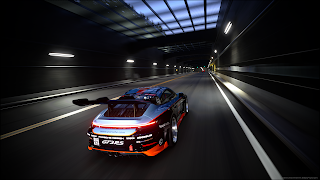

That all being said, the 992 GT3 RS isn't without flaws, but most of which I find are in the way its implemented into the game, and less to do with the car itself.

VR Showroom Photo Credit: Obelisk

To start small, GT Auto's Clayton really doesn't like the 992. This car gets absolutely zero aero options in GT Auto—it can't even be de–winged—so I hope you like the car's default downforce values, because the car is stuck with them for life. I'm also shocked to find that PD didn't scan the car with its tow hook anchor point covers removed, so installing aftermarket tow hooks will result in Clayton literally DRILLING INTO THE COVERS. Look, I know this is a minor thing, but this is inexcusably stupid and you cannot change my mind; There is NO WAY they scanned a road car exclusively for GT7 five months after the game's release not knowing they needed to scan it with the covers off. A track focused car, at that!


For comparison, here are the tow hooks offered on the 1999 Honda S2000, a car added to Gran Turismo Sport some 31 months before GT7 was even released:


Want to put a licence plate on your road car? That involves putting your own grimy decals on the car, which in turn will wipe all the factory GT3 RS decals from the car. While the community has provided replica decals, user–made content won't ever be depicted with the same fidelity as the cars' original decals, and will always be at risk of being deleted for gosh knows what reason. Want to paint the car? Say goodbye to all the bare carbon bits, too. Want to know what it took to create a super simple My Favourite Carrera tribute car? 3 hours and 109 layers. I know I'm not the most efficient guy with the livery editor, but god damn why is this such a problem in 2024. It throws off my fengshui and makes my chakra boil.


Onto issues that you might actually care about: The most immediate annoyance with the 992 is that its Drag Reduction System (DRS) is manually activated in the game, with no option for automatic deployment. With no rule governing when or how much DRS is allowed to be used, DRS is just a "free speed" button, and it sounds amazing all the way until realisation sets in that you have to hold down an extra button the whole race to run the optimally, necessitating adjusting one's grip on the steering wheel and driving in an awkward fashion akin to learning to live with a new, crippling injury. In the real car, DRS can be set to full auto, and why wouldn't anyone just leave it in full auto? DRS snaps shut on braking zones and when the steering wheel is tilted past a very limited angle, anyway, so it's not like drivers can choose how much stability and understeer they want going into a corner. The speed loss of not using DRS isn't immediately apparent, but it adds up across a lap; just the Kemmel Straight of Spa alone will see a DRS driver shave off something like 0.15 of a second over a non DRS driver.


One could argue that DRS being manually activated make sense in a video game—something that has an inherent goal of being actively interacted with by its user. If that's the case however, then GT7 really doesn't do the 992 GT3 RS justice; the real life 992 GT3 RS comes features adjustability to its front downforce, brake balance, suspension bound and rebound rates, and even the differential behaviour, all of which can be electronically adjusted right from the driver's seat to any individual's style and preferences if they can make any sense of it. Unfortunately, none of that is adjustable by default in GT7, meaning that aftermarket parts need to be bought for a prospective tinkerer who wants to fully explore and get to the most out of their track toy. A 20,000 Cr. Fully Customisable Suspension might not sound like a big deal to someone buying a 340,000 Cr. toy, but the real hit isn't financial, but rather, in the car's PP rating increasing even further from fitting an aftermarket adjustable part. Coming default with adjustable parts will also allow for tweaks to said parts under the often used BoP/Settings Partially Allowed conditions, which temporarily revert a car back to the parts it originally came with, thereby disallowing a 992 GT3 RS to be adjusted to its driver's liking. I like most of my cars with a rear brake bias in GT7's current understeer biased physics, and it's something I'd have loved to try in our weekly lobbies with the 992.


With the 992 GT3 RS driving and behaving very much like a racecar, it will, of course, suffer a lot of the same problems a racecar suffers from as well. The suspension setup is so stiff that the car has no perceptible pitch and roll from the inside and out, which works magic in the dry, sure, but makes the car damn near undrivable in the wet, where there's a very unfortunate chicken and egg issue where the tyres can't grip the pavement well enough to make the body lean in over them, and therefore there's nothing to press the relevant tyres harder into the pavement to dig up more grip. If the skies do turn gloomy, it might necessitate a panic trip to the trackside N2O shop to buy full race spec wet tyres just to keep the 992 on the track. (Thank GOD they don't charge more than Understeer for the same parts!)


The in–game HUD for the 992 is also calibrated super weirdly. Typically, the rev bar shows around the last 2,000rpm of an engine, filling up 500rpm before the rev limit and flashing the filled bar for the last 500rpm to convey to the player, "get ready to upshift!". In the 992, the rev bar instead cuts out that last 500rpm "flash zone", and so the moment it fills up is when the car has hit its 9,000rpm rev limit and bounced off its limiter. It's extremely counterintuitive and forces me to adopt a mindset of "short shift the car", despite me literally redlining it. It's so bloody annoying that, if I didn't need the radar, I'd switch off that lying piece of crap HUD entirely. It's a small issue, sure, but something that doesn't feel right in a car that's all about the raw driving experience be like i riter no god english, or going to a Gordon Ramsay restaurant only to be served overcooked instant noodles. It's boarderline rude coming from supposed specialists in their trade, and just gives off the impression that someone just ran out of time or Fs to give. The 992 deserves better than that. The silver lining to that weird HUD is that the car can be driven pretty much optimally in Automatic shifting. I don't get auto DRS, but I get auto shifting. Yay. Cool, I guess.


And for as much as the 992 GT3 RS bucks modern trends, one area in which it unfortunately can't escape is that it... feels a bit soulless. It's a bit too well put together, a bit too safe. As it is set up by default in GT7, it hardly ever fights back against the driver; it just does everything with a scary efficiency and precision, like a professional butler holding back his personal feelings. Used to be that 911s were famed for being widowmakers, the unreasonably tough final boss fight on New Game+ demanding every morsel of what you've learnt in your journey studying and battling its kind, plus some good luck on top of all that. But now it's... a math exam taken in an air con room with a caring teacher with a bad past who believes in you overseeing the test. It's not a bad thing; far from it. It's just... not what I expect from the 911 name.

And if a modern day 911 drives like this, what hope is there out there for anything else to feel any more exciting?


The 2022 Porsche 911 GT3 RS (992). Drive it if you want to be spoiled for life and hate every other supercar. Or just... you know, hang onto it as the last "pure" ICE 911 to flip it for a massive profit later. To counteract these people, I'm going to put anime girls on my 992 and take it out on dirt and snow courses. Why? Because being able to drive this track toy on dirt and snow is more important than a properly calibrated tach and auto DRS, apparently.

Monday, 27 May 2024

GT7 W58: Honda RA272 '65

The #11 Honda RA272 that raced in the 1965 season of Formula 1 might just be the most historically significant racecar to ever come from the land of the rising sun, being the first Japanese car to ever win an F1 race in just Honda's second year in making four–wheeled vehicles, establishing themselves as one of Japan's top three carmakers with boundless innovation while making themselves a household name in the highest echelon of motorsports, all with just one win.

It's just too bad I can't drive it for worth a crap.


Style edited from Replica GP Mexico 1965 by blue-screen74
#mexico #bucknum #replica

https://www.gran-turismo.com/us/gt7/user/mymenu/f197e664-c96f-40e4-a396-fa757274d799/gallery/All/19422402050114394

https://www.gtplanet.net/forum/threads/car-of-the-week-week-58-honki-honda-honda-ra272-65.418000/page-6#post-14043885

The RA272 is an old car—it was raced and retired before downforce was "invented" by Chaparral, and so driving it with modern day habits is akin to trying to operate a rotary phone by tapping it repeatedly. It doesn't mesh with my stupid millennial brain, and so instead of a review, I'm just going to share my experience and thoughts in writing, okay?


Let's start with the parts that are easier to understand: numbers. The RA272, despite its name, comes to us producing only 228HP (170kW) from a naturally aspirated 1.5L V12 engine, which goes through a rather clumsy shifting (by modern standards) 6–speed manual gearbox. Scoff at it at your own peril however, because this bathtub on wheels weighs in at a belief–defying 498kg (1,098lbs), giving it a power–to–mass ratio surpassing that of most unrestricted GT3 machines in the game!


https://www.gtplanet.net/forum/threads/car-of-the-week-week-58-honki-honda-honda-ra272-65.418000/page-24#post-14242849

The second most prominent number is... well, it's a set of numbers, actually. To say that this tiny NA V12 engine is peaky wouldn't even begin to remotely hint at just how high–strung this engine is: the tachometer in the car starts at 5,000rpm. We've tested cars here in COTW that can't even GET to 5k! The tach spans 10k rpm, going from 5 to 15k, and fuel cut in–game is set to 12k. The RA272 idles somewhere in the sub 4k range, but if you ever feel the need to see that represented on the tach, you might as well go back to huddling in a futon back home. Peak power can only be found just 500rpm below fuel cut: 11,500rpm, ditto for peak torque. You know how common knowledge says that the power and torque curves will always intersect at 5,252rpm? Yeah, me neither. All I know is that this engine needs its nuts revved clean off, and failing to do so bleeds both hours and valour.


So, all these numbers, both big and small, paint a rather fearsome picture of the RA272, but yet, once it hits the track, this thing with a better power–to–mass ratio than a GT3 car sets lap times slower than even an unrestricted GT4 Cayman Clubsport! While the RA272 has incredible numbers even by modern standards, the areas that aren't usually quantified by numbers can be summed up simply with "1965". It's an old car, and as such, didn't come with Anti–Lock Brakes. While ABS is enabled for every car by default in this game, it's immediately obvious that the RA272 was never set up for that black magic; brute–forcing the car to bite into an apex with aggressive trail braking will simply break out the rear end in a sloppy slide. I actually turned off ABS to learn the car first before turning it to "Weak" in our lobbies so as not to kill anyone too many people. Driving this car without ABS made me realise that a full rearward brake bias of +5 still locks up the front tyres without locking the rears, and was therefore utilising more of the available grip than the default, stupidly front biased brake balance. This car does come default with a fully adjustable brake balance controller, so I don't feel bad using it. Driving the car with ABS Weak after, I realised it had to be driven exactly like it had to be driven without ABS; it just made the shaving off speed part easier and more consistent.


Even if you (for some reason...) have experience driving with ABS Off in this game, the RA272 is still not an easy drive. Once the car is adequately slowed for a corner, it comes time to turn the steering wheel, and the RA272 has all the chassis rigidity of a wet cigarette. Now, I know my whole shtick is that I'm a Chris Harris and Tsuchiya Keiichi wannabe, and I get nerdy and wordy about how a car feels to drive, but chassis rigidity is something I have no confidence in pinpointing in a video game, let alone describing in writing. It's just not a problem modern cars have anymore. I'll try to describe what it feels like, but take everything with more than the usual pinches of salt, okay?


In a modern racecar, the brake pedal is almost a potentiometer of "how much stress do I want to put on the front tyres", and it's usually pretty proportionate to how much grip the front tyres have. Press the brakes harder, the car stops quicker. Need weight over the front? Dab the brakes a slight bit. It's a very simple cause and effect. In the RA272 however, the chassis is so structurally weak that the front tyres just stop responding any further past halfway into the brake pedal travel, with any further attempts to shift weight up front henceforth being used to warp the body instead. That is to say, this thing will NOT adjust mid corner if I misjudge the entry into a corner, and using any more than half the brake pedal is just an instant lockup.

It's not just the brakes that can exert stress on the chassis, of course; so can the steering wheel, which can have equally disastrous effects on the car.


Past a certain stress threshold, there's a palpable, yet inconsistent delay between input and feeling said input register in the car, both from the steering wheel and the pedals. Putting the RA272 through the stresses of brisk driving goes something like this: I roll over a rumble strip and/or turn the front end of the car semi hard. I then send a detailed report of what, where, when, and how fast I did it via Morse code by tapping the ground and hoping those vibrations carry over to Japan. From there, I wait for the folks at Honda to hold several board room meetings to work out the physics of my manoeuvre with the sophisticated aid of abacuses and simulations done with clay models made by special Takumi craftsmen specifically for each report I send, before discussing over tea and rice crackers whether my manoeuvre besmirches upon their family honour or not. Within 11 working days of having reached a decision, they will write back to me in Japanese, sending a pigeon to my current location. The moment of truth comes when I put that letter through an OCR translation tool, and if the esteemed council at Honda finds that the rumble strip I rolled over was too pronounced or that I turned the front end of the car too hard for the rear to keep up, the punishment for my misdeed(s) is rendered instantaneously in that very moment. If I'm not seated in a car at that point, like if I were, say, in a hotel room, the whole hotel would then proceed to break sideways and oversteer into a mountain for seemingly no reason to the untrained eye of an innocent bystander.

That's how far divorced the cause and effect is when driving an RA272.


Driving the RA272 safely therefore, requires one to be extremely cognisant of any and every feedback the car gives the driver. Thankfully, the car is light enough that its steering wheel could be rocked back and forth ever so gently by the seemingly mirror–smooth home straight of Suzuka, making the circuit that hosts several high–downforce races in a year feel like a beat–up rural road. While the steering wheel talking to me in a modern racecar is usually met with the automotive equivalent of, "I got it, mooooom, sheesh, I'm not a kid anymore!", the moment the steering wheel even looks at me sternly mid–corner in the RA272, I back off and say, "yes, mommy. I'll be a good boy, I'm sorry for existing"... or whatever the automotive equivalent of that is. The RA272's emphasis on the driver being cognisant of every little tell might mean that it's a car that really rewards its driver having high end sim racing hardware, such as a load cell brake pedal and a direct drive wheel. I'm unfortunately not rich enough to test that out.


If unhindered by BoP, I would take even the worst Gr.4 car in existence over the RA272 as a driving experience, because even a stripped out, barebones Gr.4 racecar feels like a luxury spaceship in direct comparison to the RA272. But it has to be said that the RA272 feels properly special, even in a game that can't sell a Jimny to a stranded fan. It is the oldest F1 car in the entire series of Gran Turismo, and the only one of its era. The Discover section for this car therefore, is filled with replicas of other F1 cars of its era, and for that reason, I imagine there'd be someone out there crazy enough to collect 20 of these bad boys to replicate an old F1 grid in Custom Race. And while its very similar in pace to slicks–shod modern day track toys like the X-Bow, it has a (mostly) central seating position and exposed wheels to give an driving perspective that is excruciatingly rare in the whole game, and I wish more cars would adopt a centre seating position, especially track toys. No modern day turbocharged econobox engine track toy however, will give you even remotely the tinge and thrill of a NA 1.5 V12 going to 12k, and it's something so rare and extraordinary that I have to get used to again and again at the start of each drive I have with it. It's just so out of this world! It's criminal that this engine isn't available to swap into other cars by now! All that is to say, while I wince at the thought of driving it hard in competition, it feels really special to drive at five tenths. It's a good Tokyo or Le Mans grind car for that reason, if you don't mind dropping 2.5 mil for one.